The Ultimate Guide to Choosing the Best Planters for Trees
Updated: Feb 15
Selecting an appropriate planter is fundamental to supporting tree health and long-term performance in container applications. Planter selection should be informed by site conditions, material durability, and structural requirements, whether the project involves a residential garden, a commercial development, or a rooftop installation. This overview outlines the primary factors influencing tree planter selection, including material properties and functional features. It also addresses tree species that are well-suited to container environments and compatible with a range of design objectives.

Why the Right Planter Matters for Tree Longevity
The planter you select significantly affects your tree's health and longevity. Beyond aesthetics, the right planter supports root development, water retention, and overall tree well-being.
Effects of Incorrect Planter Size or Material on Tree Growth
Small or poorly chosen planters can stunt tree growth. Tight planters restrict root expansion, causing root-bound conditions that limit nutrient and water uptake. Inadequate drainage may cause root rot, resulting in weak growth or tree death.
Importance of Providing Adequate Root Space
Roots require space to grow and support a healthy tree. A planter that is too small can cause roots to circle, leading to girdling and potentially killing the tree. Sufficient root space is essential for long-term health.
The Right Planter Contributes to Tree Longevity
A properly sized planter promotes strong root development and healthy growth. Adequate space and drainage prevent waterlogging and support tree longevity. A stable planter also protects against tipping, allowing unrestricted growth.
Key Technical Features (Size, Drainage, Stability, Root Anchoring)
Selecting a planter for trees requires attention to technical criteria that directly impact both tree health and long-term structural performance.
Recommended Planter Depth and Volume
Planter dimensions should be based on the size of the root ball and anticipated root expansion. For most trees, specifying a planter at least 12 inches wider than the root ball allows for healthy root development. For larger specimens, increasing the width by 25 percent is typically sufficient to prevent root binding without introducing unnecessary weight or bulk. Oversized planters can create handling challenges and may exceed structural load limits, particularly in rooftop or elevated installations.
Importance of Drainage Holes and Proper Water Flow
Effective drainage is essential to prevent water accumulation and root rot. Planters should be specified with engineered drainage holes to ensure consistent water flow and avoid oversaturation of the root zone. Proper drainage design supports long-term tree health and reduces the risk of structural deterioration caused by trapped moisture.
Ensuring Stability and Wind Resistance through Internal Bracing
Stability must be addressed through internal bracing or anchoring systems that resist wind uplift and prevent tipping. For commercial or rooftop applications, specifying planters with integrated stabilizers or anchor points is essential to maintain safety and structural integrity under variable wind loads.
Professional-Grade Planters for Large Trees Requiring Root Anchoring
For particularly large tree planters, such as those in commercial spaces or on larger residential properties, professional-grade planters with internal anchoring mechanisms are required. These planters typically come with systems that secure the root ball, preventing movement and ensuring long-term stability of the tree.
Best Materials for Large Trees
Material selection for tree planters directly affects durability, structural stability, and weight—factors critical in applications such as rooftop gardens. Evaluating these criteria early in the design process helps ensure the planter performs as intended over time.
Advantages of Marine-Grade Aluminum: Lightweight and Corrosion-Resistant
Marine-grade aluminum is frequently specified for large tree planters due to its favorable strength-to-weight ratio and corrosion resistance. In rooftop or balcony applications, minimizing structural load is essential, and aluminum provides the necessary support without excessive weight. The material’s durability and resistance to environmental exposure contribute to long-term performance in both commercial and residential settings.
Benefits of Fiberglass: Customizable, Lightweight, Modern Aesthetic
Fiberglass planters offer a combination of low weight and design flexibility, with a range of available finishes and forms. The material is weather-resistant and can be specified with additional insulation to protect root systems in colder climates. These characteristics make fiberglass suitable for both interior and exterior applications where weight and customization are priorities.
Concrete Planters: Heavy-Duty, Long-Lasting, Ideal for Large Trees
Concrete planters are specified for large trees when maximum stability and impact resistance are required. The inherent weight of concrete helps anchor trees in exposed or high-traffic environments, reducing the risk of movement or tipping. Concrete’s durability and ability to integrate with urban landscapes make it a practical choice for commercial projects where long-term performance is a priority.

Aesthetic Integration: Matching Your Architecture
When selecting planters for trees, it’s not just about function—it’s also about form. Planters should seamlessly integrate with the surrounding architecture and landscape to enhance the space's overall visual appeal.
For designers and commercial buyers, Urban Pot offers custom design services to help you integrate tree planters seamlessly into your space. Whether you’re designing a corporate campus, a luxury residence, or an urban park, custom planters can be crafted to meet both aesthetic and functional requirements.
Choosing Planter Styles that Complement Architectural Features
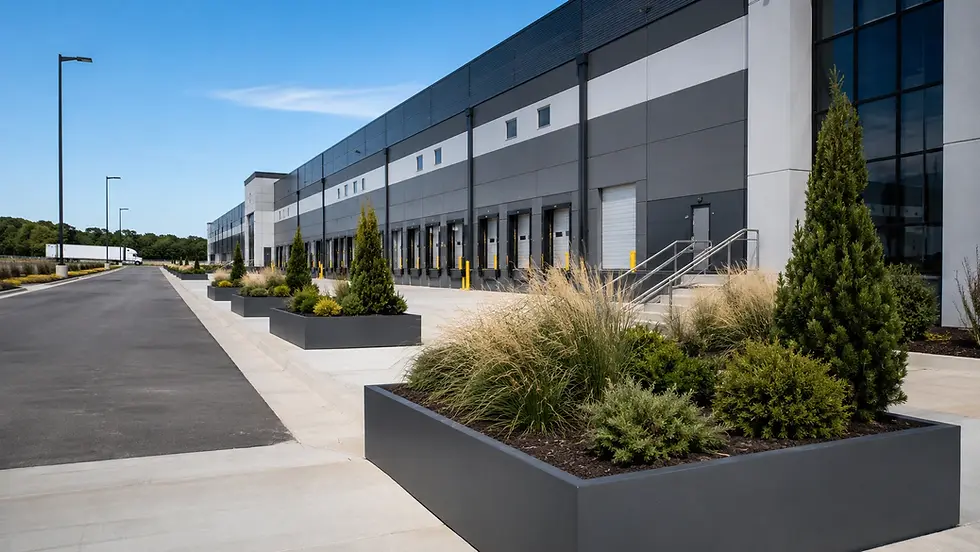
Planters should complement the space's design and architecture. Whether you are working with a modern, minimalist building or a more traditional style, the right planter can elevate the entire look. Urban Pot’s customizable options offer a range of styles and finishes, ensuring the planters enhance the space rather than overpower it.
Examples of Integrating Planters with Commercial and Custom Tree Planters
Incorporating planters into your project should go beyond simply placing them on the ground. Urban Pot’s experience with commercial and custom tree planters allows for integration with architectural features such as patios, walkways, and garden installations. Whether you need sleek, industrial-style planters or more organic, earthy options, there is a perfect planter for every project.
Maintenance & Winterization
Routine maintenance and winterization are necessary to maintain planter performance and support healthy tree growth over time. Addressing these requirements helps ensure planters remain functional through seasonal changes.
Seasonal Care for Tree Planters (Watering, Cleaning, Checking for Stability)
Ongoing maintenance should include verifying planter stability, clearing drainage openings, and removing debris or algae accumulation. For large-scale installations, inspection of internal anchoring systems is recommended to maintain structural integrity.
Preparing Planters for Winter: Insulating and Protecting Against Freezing
In cold climates, winterization should address root protection by insulating the planter and applying mulch to reduce the risk of frost damage. These measures help maintain root viability during freeze-thaw cycles.
Long-Term Care to Extend the Life of Your Planters
Long-term performance depends on regular cleaning, re-sealing, and inspection for structural damage. Concrete planters benefit from periodic sealing to limit water ingress, while fiberglass and aluminum units require less frequent intervention but should be assessed for surface or structural issues.
Selecting planters with appropriate size, material, and technical features, combined with a defined maintenance strategy, supports healthy tree growth and long-term durability. Early attention to these factors reduces maintenance requirements and extends the installation's service life.

Customization Options: Internal Bracing and Tree Anchoring
For large trees, planter stability is a primary consideration. Internal bracing increases the planter's structural capacity, supporting significant root-ball weight and minimizing movement. Eye-bolt anchoring secures the tree to adjacent structures, reducing the risk of tipping in high winds or public spaces. These measures are especially important for rooftop installations or exposed sites, where wind loads and limited soil volume can compromise stability. Specifying these options at the design stage helps maintain tree health and reduces the likelihood of failure over time.
FAQs
How to choose the right size planter for a tree?
To choose the right size planter, select one that is at least 12 inches wider than the root ball of your tree, allowing space for growth. For larger trees, a planter that is 25% larger than the root ball is recommended to ensure the roots have enough space to expand.
Do I need a professional for large planter installations?
For large tree planters, it's often best to consult a professional, especially when dealing with heavy-duty materials or requiring customization like internal bracing or eye-bolt anchoring. A professional ensures proper installation, stability, and tree health.
Can I customize my tree planter with Urban Pot?
Yes, Urban Pot offers custom design services for tree planters. We specialize in creating planters tailored to your specific needs, whether its size, material, or aesthetics, for both residential and commercial projects.
Can I use a planter for trees indoors?
Yes, planters are ideal for indoor trees, but be sure to choose a planter with adequate drainage and size to allow the tree to grow comfortably. Larger indoor planters should also be lightweight enough to move when necessary.
What are the best trees for container planting?
Trees with compact root systems, such as dwarf varieties or slow-growing species, are best suited for container planting. Some great options include Japanese maple, olive trees, and citrus trees.
How do I prevent my planter from tipping over in high winds?
To prevent tipping, ensure your planter is heavy enough or use planters with internal bracing or eye-bolt anchoring. For windy areas, large concrete or aluminum planters provide stability, while anchoring the tree to nearby structures offers extra security.
Can I plant multiple trees in one large planter?
Yes, you can plant multiple trees in one large planter, but be mindful of each tree's space requirements. Ensure the planter has enough depth and width to accommodate the root systems of all trees without crowding or restricting growth.