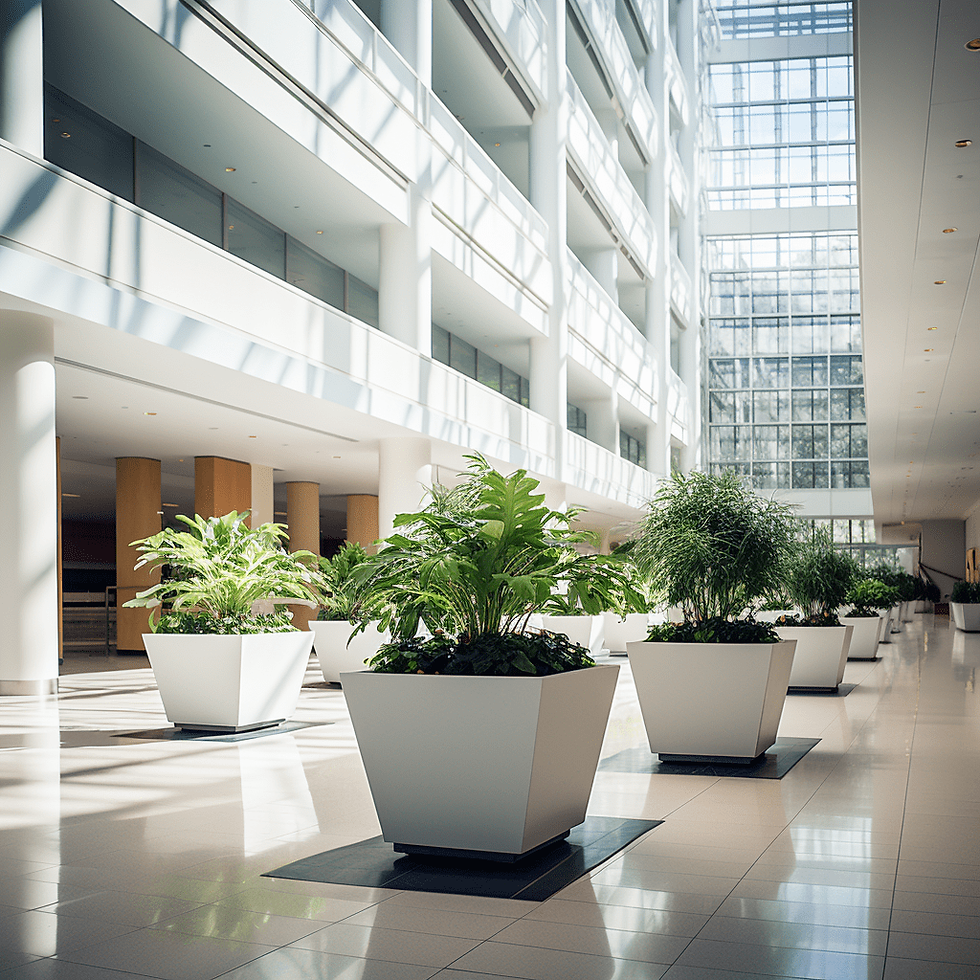
How to Choose Commercial Planters for Restaurant Patios
Updated: Mar 5
Commercial planters play a structural role in restaurant patio design.
Beyond decoration, they define circulation zones, create safety barriers, improve guest comfort, and introduce greenery that enhances the dining experience. Selecting the right commercial planter, considering material, dimensions, drainage, and plant design, is essential for both operational efficiency and long-term durability.
This guide provides a concise overview of key considerations, with additional technical detail for those requiring deeper specification guidance.
Key Takeaways
In commercial settings, planters define outdoor dining zones, enhance guest comfort, and serve as safety barriers. Powder-coated marine-grade aluminum remains the benchmark for durability, offering corrosion resistance and a service life of 15 to 20 years. When evaluated on a lifecycle cost basis, aluminum outperforms wood or plastic alternatives, which are more susceptible to warping, rot, or UV degradation.
Effective planter specification for restaurant patios requires balancing structural durability, sufficient soil volume, engineered drainage, and modular mobility. Concealed heavy-duty casters or forklift pockets allow staff to reconfigure layouts efficiently for private events or seasonal adjustments, supporting operational flexibility while maintaining structural performance.

Why planters matter: comfort, ambiance, and safety
Planters, when properly designed and specified, delineate outdoor dining areas, enhance perceived comfort, and serve as physical safety barriers. Studies indicate that integrating natural elements into hospitality environments supports occupant well-being and can improve air quality. Substantial planters also provide critical separation from vehicular traffic and establish a defined sense of enclosure.
Biophilic design principles recognize the positive human response to greenery. On restaurant patios, planters with fragrant herbs and ornamental grasses soften hardscape edges, buffer noise, and provide privacy between tables. Many municipal codes now permit planters as removable barrier elements, provided they are maintained, at least 18 inches wide, and no more than 36 inches tall. In these cases, aesthetics and regulatory compliance are closely aligned.
What is the best material for commercial restaurant patio planters?
Aluminum planters fabricated from marine-grade 5052 alloy and finished with VOC-free powder coatings provide a combination of low weight, corrosion resistance, and recyclability. While the initial investment is higher than wood or plastic, powder-coated aluminum typically delivers a service life of 15 to 20 years with minimal maintenance, resulting in a lower annualized cost. For installations in high-solar or arid environments, rigid-foam liners or inner sleeves can be specified to moderate root-zone temperatures. In temperate climates, these measures are generally unnecessary. Aluminum’s high reflectivity further assists in temperature regulation. Its favorable strength-to-weight ratio makes it especially suitable for rooftop applications and custom fabrication.
High-quality fiberglass planters are lightweight, UV-stable, and non-corrosive, making them well-suited for rooftop installations where structural load is a concern. The insulating properties of fiberglass help buffer temperature fluctuations, and the material can be finished to replicate stone or metal as required by the design intent.
Corten steel, a weathering steel alloy, develops a stable patina over time and is often specified for industrial or rustic aesthetics. While highly durable, Corten is significantly heavier than other materials and may stain adjacent surfaces due to runoff. It is best utilized at grade level, with interior sealing recommended to prevent soil contamination.
Concrete planters provide substantial mass and stability but are limited to ground-level installations due to their weight. Glass fiber-reinforced concrete (GFRC) offers improved strength-to-weight ratios and enhanced resistance to cracking, making it a more versatile alternative where reduced weight is required.
High-density polyethylene (HDPE) and resin planters are impact-resistant and cost-effective, but may lack the visual quality of premium materials and are prone to deformation under high temperatures. These are best reserved for temporary or interior applications where long-term exposure and structural demands are minimal.
Aluminum (powder‑coated) | Lightweight, corrosion‑resistant, 100 % recyclable, customizable; reflects heat; optional inner insulation for hot climates | Higher initial investment, but low cost per year over a 15–20 year lifespan; optional insulation may be needed in sunny or arid climates |
Fiberglass | Lightweight, durable, UV‑resistant; insulates roots; versatile finishes | Use high‑quality versions to avoid cracking; may fade over decades |
Corten steel | Rustic patina, high strength, long life | Heavy; potential surface stains; requires liners and good drainage |
GFRC | Concrete appearance with lower weight; crack‑resistant | Still heavy; best for ground level |
Resin/HDPE | Impact‑resistant, affordable, light | Less premium look; can warp; not ideal for harsh sun |
Wood | Warm aesthetic, natural material | Needs sealing; susceptible to rot; heavier |
Urban Pot manufactures custom commercial planters for hospitality projects across North America, with powder-coated aluminum representing the majority of our installations due to its strength-to-weight performance and durability.
What size planters should restaurants use for patios?
The planter scale should be matched to the patio dimensions and provide adequate soil volume for intended plantings. Commercial guidelines recommend that planters be appropriately scaled, fabricated from durable materials, and engineered to provide sufficient soil volume and drainage. For sidewalk installations, municipal codes may require planters to be removable and to maintain unobstructed pedestrian pathways and sightlines.
For restaurant patios, this translates to:
Width and height: For use as barriers, planters should be at least 18 inches wide and no more than 36 inches high to ensure stability and safety while preserving visibility. Larger containers may be used to accommodate small trees or shrubs where appropriate.
Soil volume: Trees and large shrubs require substantial soil volumes; urban standards often recommend a minimum of 54 cubic feet for street-side installations. For patio applications, a soil depth of 18 to 24 inches is generally sufficient for shrubs and perennials. Deeper containers are preferred over wide, shallow ones to improve root insulation and plant health.
Drainage: Planters must be engineered with adequate drainage holes. Contrary to common belief, placing gravel at the bottom of containers does not improve drainage and may even impede water movement, increasing the risk of root-zone saturation.
Mobility and modularity are critical for restaurant patios that require frequent reconfiguration for private events or seasonal changes. Lightweight materials such as aluminum, combined with concealed heavy-duty casters or forklift pockets, enable planters to be repositioned efficiently without disrupting operations. With this approach, two staff members can reconfigure an entire terrace in approximately ten minutes.

Plant selection and climate considerations
Plant selection should be based on the local climate and the patio's specific microclimate. Roots in containers are more vulnerable to freezing than those in open ground. It is advisable to select species rated for at least two USDA hardiness zones colder than the installation site and to use larger containers to enhance root insulation.
For restaurants in cold regions like Canada and the northern US, opt for boxwood (Buxus), compact conifers, ornamental grasses, junipers, dwarf pines, and hardy perennials. These species offer year-round structure and withstand frost. Avoid tropical houseplants (snake plant, pothos, peace lily) outdoors; use them only in protected indoor or covered patio spaces. For winter protection, cluster containers together and move them near buildings or under eaves to shield them from wind. Sturdy plastic and fiberglass planters are ideal for leaving outside, whereas porous terracotta tends to crack; if used, it should be insulated or moved indoors.
To ensure success:
Select plants that provide seasonal interest—evergreens for winter structure, blooming perennials and herbs for summer fragrance.
Incorporate drought-tolerant species such as lavender, rosemary, and sedum to minimize maintenance requirements.
Specify self-watering reservoirs or drip irrigation systems to maintain consistent soil moisture and reduce staff workload.
Design and placement strategies for Commercial Planters
In hospitality design, planters function as architectural elements, structuring outdoor rooms, framing views, and guiding guest movement.
Arrange planters to create natural barriers, direct foot traffic, and frame views. Keep an 8‑foot clear path or 50 % of sidewalk width for pedestrian circulation on public walkways.
On a restaurant patio, planters should be clustered to define dining zones while maintaining clear circulation. Tall, narrow planters can screen service areas, while lower containers near seating preserve sightlines. Consistent planter dimensions and alignment with architectural lines establish visual rhythm and order. For maximum flexibility, specify planters with concealed heavy-duty casters. Modular units can be repositioned to accommodate changing operational needs, such as opening a dance floor or creating private seating areas. Integrated benches or bar tops can increase seating capacity, and planters may be designed to incorporate lighting or audio components as required.
A simple design checklist:
Identify zones – entry, waiting area, dining clusters, service path.
Select shapes – rectangles to define edges, squares or rounds for focal points.
Vary heights – combine tall containers (30 – 36 inches) with low bowls for layered plantings.
Maintain flow – leave at least 18 inches from curb or walkway and ensure wheelchairs can navigate between planters.
Integrate branding – choose finishes and colours that reinforce your restaurant’s identity
Maintenance and sustainability
Durable materials and consistent care extend the life of your investment and support sustainability goals. Urban guidelines stress the importance of proper maintenance plans; neglected planters can become eyesores and safety hazards.
Regular inspections: Irrigation systems, drainage apertures, and soil moisture should be monitored weekly. Dead or declining plant material should be replaced promptly.
Seasonal updates: Plantings should be refreshed seasonally, with arrangements adjusted to reflect menu changes or special events as appropriate.
Eco-friendly practices – Use organic potting soils, compost, and integrated pest management. Powder-coated aluminum and fiberglass are recyclable, aligning with LEED and WELL building certifications.
Longevity: High-quality aluminum and fiberglass planters are engineered for service lives measured in decades. Structural warranties and refurbishment programs can further extend lifecycle value.

Final thoughts
Selecting commercial planters for restaurant patios requires balancing aesthetics, structural durability, safety, and climate resilience. Materials such as aluminum and fiberglass should be prioritized for their strength-to-weight ratio and weather resistance. Plant selection must be appropriate for the local climate, and layouts should be engineered to support both ambiance and operational requirements. When these factors are addressed at the specification stage, the patio becomes a functional extension of the dining area throughout the year.
Urban Pot has helped design and fabricate planters for some of North America’s most acclaimed restaurants, hotels, and mixed‑use developments. Whether you need custom-fabricated aluminum planters, integrated seating modules, or winter‑proof fiberglass containers, our team delivers end‑to‑end solutions.
Explore our collections and contact us for a consultation. Let’s build restaurant patios that stand out, beautifully, sustainably, and safely.
FAQ – Commercial Restaurant Patio Planters
1. What size planters work best for restaurant patios?
Commercial patio planters are typically 18–36 inches tall and at least 18 inches wide to ensure stability and sufficient soil volume for shrubs or ornamental plants. Larger planters can define dining areas, provide privacy, or serve as safety barriers along sidewalks or street-side patios.
For trees or large shrubs, use containers with 18–24 inches of soil depth to support root growth and plant health.
2. What is the most durable material for commercial outdoor planters?
Powder-coated marine-grade aluminum is considered the best material for commercial restaurant patios because it is:
Corrosion resistant
Lightweight yet structurally strong
Suitable for rooftop or terrace installations
Customizable in size, color, and shape
High-quality aluminum planters typically last 15–20 years, offering lower long-term costs than wood or plastic containers, which may warp, rot, or fade.
3. Can restaurant patio planters be moved or reconfigured easily?
Yes. Many commercial planters can be fitted with concealed heavy-duty casters or forklift pockets to quickly reconfigure the patio layout, for example, transforming the space for private events, large-group seating, or seasonal layouts. With modular planters, an entire terrace can often be rearranged in 10–15 minutes.
4. What plants work best in restaurant patio planters?
Plant selection depends on climate and exposure, but restaurants often choose:
Boxwood and compact evergreen shrubs for year-round structure
Ornamental grasses for movement and texture
Lavender, rosemary, or herbs for fragrance and culinary use
Dwarf conifers or junipers for cold climates
5. Do aluminum planters need insulation for plants?
Not always. Because aluminum conducts heat, use inner liners or rigid foam insulation in sunny or arid climates to protect plant roots from overheating.
In temperate or cooler climates, insulation is often unnecessary since planter walls and soil volume provide sufficient protection.