

Leasing vs. Buying Commercial Planters: A Financial Guide for Facilities Managers
Leasing and buying planters solve different problems, and the wrong choice shows up on the balance sheet long before it shows up on the roof. A two-year pop-up doesn't need 40 planters sitting on an asset register for a decade. A hospital courtyard built to last 30 years doesn't need a lease renewal notice every 24 months.
The right call comes down to three things: how long the planters need to stay in service, whether the expense should be capital or operating, and how the payment schedule matches your project's funding cycle.
The classification usually comes down to who's signing the PO. A capital purchase needs sign-off against next year's budget cycle; a lease-compatible order can move faster if it's coded to an operating line. Urban Pot builds both structures into its commercial quoting, so procurement teams pick the one that fits how their department actually absorbs cost.
This guide covers how planter leasing works, what drives buying costs, and how to match financing to service life. For how material and construction affect long-term value, see Urban Pot's cost vs. value guide. This is about the money, not just the pot.
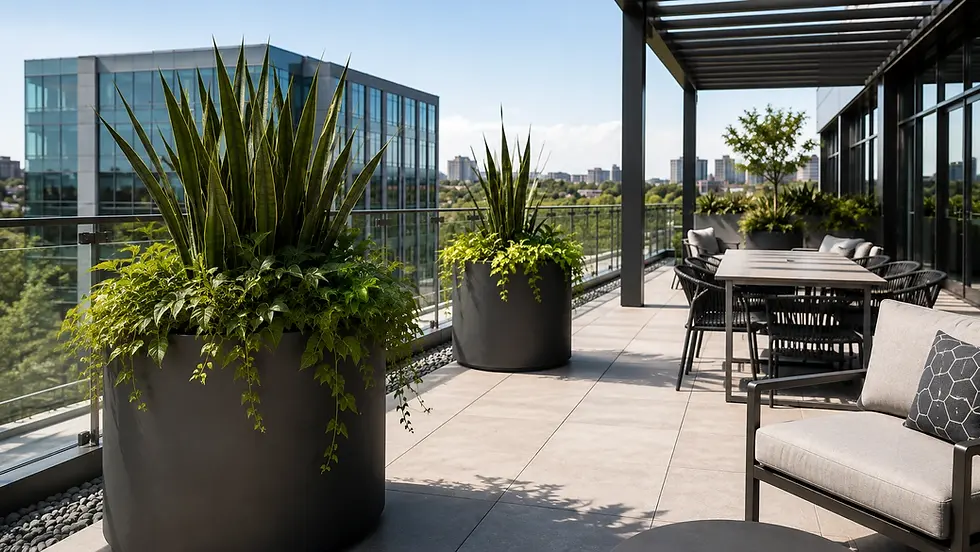
Why "Leasing a Planter" Means Different Things to Different Budgets
Facilities and procurement teams often use "leasing" loosely to mean anything that isn't a one-time purchase order. In practice, a planter program can fall into one of two very different accounting categories, and the difference changes how the expense shows up in a budget review.
An operating lease treats the planters closer to a rental: the facilities team pays a recurring amount for use of the asset, and the equipment doesn't sit on the balance sheet as owned property. This is the structure most often used for short-term retail activations, seasonal installations, or pilot programs where the planter count or layout might change.
A finance lease (what used to be called a capital lease before the accounting rules changed) functions more like a financed purchase. The lessee records both an asset and a liability, and by the end of the term, ownership effectively transfers.
Under current U.S. lease accounting guidance, both lease types now appear on the balance sheet, which is a meaningful change from the older rules that kept operating leases off the books entirely. Cornell University's overview of lease classification is a useful plain-language starting point for facilities teams who need to understand which bucket their planter program falls into before signing anything.
An outright purchase skips the lease classification question altogether. The planters are a capital asset from day one, typically depreciated over their expected service life, which for Urban Pot's marine-grade aluminum and fiberglass planters commonly runs 30 years or more with routine maintenance.
The Real Cost Drivers Behind Buying
Before comparing lease and purchase numbers side by side, it helps to know what actually drives the price of ownership, because "harsh winter durability" isn't a line item a finance team can budget against.
Material is the biggest factor. A high-density resin planter and a marine-grade aluminum (5052-H32) planter built for freeze-thaw cycling can differ by several hundred dollars per unit once size and finish are factored in, and that gap compounds fast across a 40-unit rooftop order. Custom sizing, powder-coated finishes, and drainage integration each add cost on top of the base material.
On the standard product line, small planters typically start in the low hundreds of dollars, while large custom commercial installations can run into the thousands per unit, so a purchase decision needs a real quantity and spec sheet before the comparison means anything.
Installation and site prep are a separate cost category. Rooftop and podium installations require load calculations, drainage detailing, and anchoring that a ground-level courtyard project doesn't. Warranty terms also vary by material, typically one to five years, which affects the effective cost per year of service once a facilities team amortizes the purchase.
Factor | Operating Lease | Finance Lease | Outright Purchase | Typical Best Fit |
Balance sheet treatment | Right-of-use asset, lease expense | Right-of-use asset and liability | Capital asset, depreciated | Depends on reporting priorities |
Upfront cash outlay | Low | Moderate | Highest | Purchase needs available capital |
Planter lifespan used | Short program, 1 to 3 years | Matches most of useful life | Full 20 to 30+ year service life | Long-term sites favor purchase |
End-of-term outcome | Return or renew | Ownership typically transfers | Owned from day one | Depends on portfolio flexibility |
Note: figures reflect typical ranges for commercial-grade planter programs and will vary by material, quantity, and site conditions; confirm current numbers with a project-specific quote.
When Leasing Fits a Facilities Budget
Leasing tends to make sense when the planter installation is tied to a defined program length rather than the life of the building. A retail landlord activating a temporary courtyard for a two-season promotion, a contractor staging planters for a phased construction project, or a property manager testing a rooftop amenity before committing to a permanent build-out are all cases where matching the payment term to the program length avoids sinking capital into an asset that might not stay in place.
Leasing can also help when a facilities budget has more room in the operating expense line than in the capital expenditure line for a given fiscal year. That's a real constraint for many property management teams managing multiple buildings against a fixed annual capital plan, and it's worth flagging to whoever owns the budget before the RFQ goes out, not after.
Urban Pot's work with contractors on phased rooftop and podium installations often starts with exactly this kind of budget conversation.

When Buying Outperforms Leasing
Buying wins on total cost whenever the planters are expected to stay in place for most of their service life, which for well-built commercial planters is measured in decades, not seasons. A REIT or property management firm installing planters as a permanent amenity across a multi-building portfolio is a straightforward purchase case: the lease premium over a 20-plus year hold rarely pencils out against a one-time capital cost, especially once depreciation is factored in.
Purchasing also gives facilities teams full control over material selection, since a leased unit is often whatever the leasing company has in inventory rather than a planter matched to the site's specific load, climate, and branding requirements. Projects that need custom logo planters for a lobby, entrance, or branded amenity space are almost always better served by a purchase, since custom artwork and finish work don't lend themselves to a return-and-renew lease structure.
Matching the Decision to the Project Type
The clearest way to frame this for a budget committee is by asset horizon rather than by planter type. A facilities team can ask three questions before choosing a structure: how long will these planters realistically stay installed, does the current fiscal year have more room in capital or operating budget, and does the project need custom specification work that a lease inventory can't provide.
Architects and design teams working on new construction or major renovations are almost always in purchase territory, since planters specified into a building's landscape plan are meant to last as long as the building's other permanent fixtures.
Facilities managers running short-term activations, seasonal programs, or multi-site rollouts have more reason to look at a lease-compatible structure, especially if the order volume also qualifies for a wholesale bulk-order program. For a deeper look at how planter specification decisions get made on the technical side, Urban Pot's specification guide for architects covers the RFQ and drawing review process that applies regardless of how the purchase is financed.
Facilities managers weighing this decision against a hard budget deadline should also account for lead time. A custom commercial planter order with powder-coated finishes and drainage integration typically needs several weeks of production time before delivery, and that timeline doesn't change based on whether the purchase is financed as a lease or a capital expense.
Confirming the financing structure early keeps that lead time from becoming a scheduling problem later. Urban Pot provides financing-ready quotes and material specification documentation on request for facilities and procurement teams across Canada and the United States, at team@urbanpot.com, which is often the fastest way to get a real number in front of a budget committee instead of a rough estimate.
Frequently Asked Questions
Q: Is leasing commercial planters cheaper than buying them?
Leasing usually costs less upfront but more over the full life of the planter. For programs lasting one to three years, leasing typically comes out ahead. For installations meant to last a decade or more, purchasing is almost always the lower total cost.
Q: Do leased planters count as an operating expense?
Most operating leases are reported as a recurring lease expense rather than a depreciable asset. Under current accounting standards, they still appear on the balance sheet as a right-of-use asset, but the payment itself is typically treated as an operating cost.
Q: Can commercial planters be leased with a purchase option?
Yes. A finance lease structure typically results in ownership transferring to the lessee by the end of the term. This works well for facilities teams that want to spread the cost over time but plan to keep the planters permanently.
Q: How long do commercial planters typically last?
Well-built planters in marine-grade aluminum or fiberglass are commonly engineered for 20 to 30 years of service with routine maintenance. Lower-grade materials tend to need replacement within a few years, which changes the leasing versus buying math significantly.
Getting Lease vs. Buy Planter Decisions Right the First Time
Choosing between leasing and buying commercial planters is not the result of picking whichever option looks cheaper on the initial invoice. It comes down to three specific financial variables: how the expense is classified on the balance sheet, how long the planters need to stay installed, and how the payment schedule lines up with the project's budget cycle.
Confirming the financing structure before the RFQ goes out prevents a mid-project reclassification headache with the finance department and avoids locking a short-term program into a long-term capital commitment it doesn't need.
Urban Pot works with facilities and procurement teams to quote both lease-compatible pricing and outright-purchase pricing before budget approval, whether the project calls for a multi-year rooftop planter program across a property management portfolio or a one-time purchase for a single building lobby renovation.


