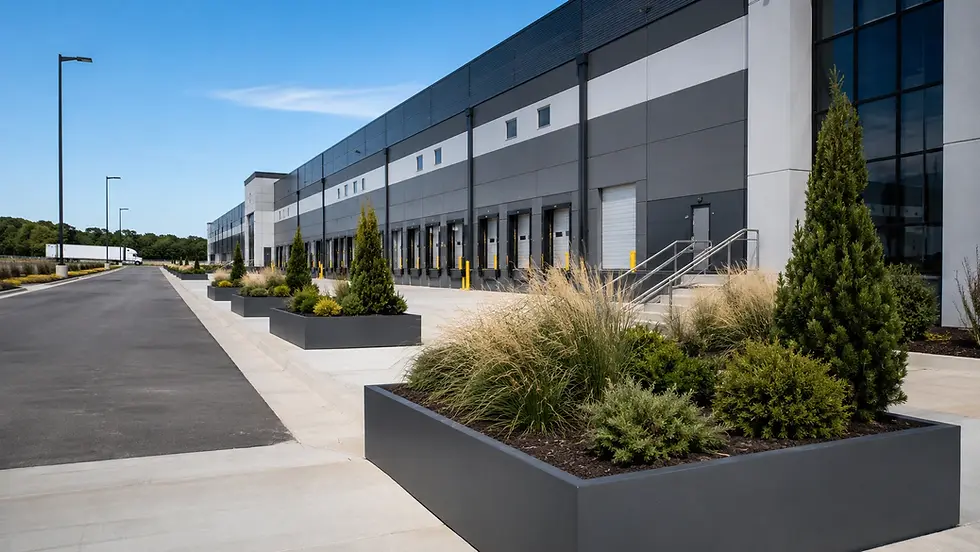
Best Precast Concrete Planter Styles for Modern Landscaping
Updated: 3 hours ago
Updated: 18 September 2026
"Durable" is not a real specification. It tells a landscape architect nothing about compressive strength, curing time, or how a planter will hold up through a Montreal winter versus a Toronto summer. What actually matters is what the concrete is rated for, how it's reinforced, and how it drains.
At Urban Pot, our concrete planters are manufactured to a minimum 5,000 psi compressive strength, engineered for the freeze-thaw cycles and road salt exposure that define Canadian outdoor projects.
This guide covers what precast concrete offers over other large-planter materials, how to plan a landscaping project around it, and how to keep it looking right for decades, not just seasons.

Exploring Precast Concrete Planters
Precast concrete planters stand out for their durability and stability. Unlike lighter materials, these heavy-duty planters resist tipping and weather damage, making them a reliable choice for any outdoor setting.
Precast concrete planters' robust construction keeps them firmly in place and gives your plants a secure environment. Every Urban Pot planter is backed by a warranty covering defects in workmanship and materials.
Durability and Weather Resistance
Precast concrete planters are designed to endure harsh outdoor conditions and resist damage from wind, rain, and temperature fluctuations. This makes them ideal for both residential and commercial landscapes, where reliability is essential for maintaining a beautiful space year-round.
Consistent production controls help ensure each planter meets strict durability standards batch after batch. In Canada, precast concrete manufacturing is governed by CSA A23.4, the national standard covering materials and construction methods for architectural and specialty precast products.
Excellent Insulation Properties
One standout feature of concrete planters is their insulation. Concrete density helps keep root systems protected during colder months and prevents water leakage into surrounding areas. Lighter-colored concrete finishes can also help prevent overheating in summer by absorbing less sunlight, so plants stay healthier across a wider range of climates.
Aesthetic Appeal
Beyond functionality, precast concrete planters add an elegant, industrial-modern touch to any outdoor space. From residential gardens to commercial streetscapes, these planters enhance the overall aesthetic and act as design elements in their own right, not just containers for plants.
Versatile Sizes and Shapes of Precast Concrete Planters
The versatility of precast concrete planters is remarkable. Available in a wide range of sizes, they accommodate everything from small flowers to mature trees. Whether you need a tall planter for a young tree or a shallow one for low-growing flowers, there's a concrete option that fits.
Shapes are equally diverse, including round, square, rectangular, and various bowl profiles. This variety supports creative landscaping, letting you mix and match forms for a cohesive yet dynamic outdoor space. Browse our full standard planter collection to see current sizes in stock.
Customization Options
We design custom planters in sizes built to fit any landscaping need or aesthetic preference, so your planters complement the overall design of your outdoor space. Color matching against popular paint-brand codes allows for seamless integration with existing color schemes, whether you want your planters to blend in or stand out.
Beyond color, finish is its own decision. A smooth sandblasted surface reads clean and contemporary, while an exposed-aggregate finish shows the natural stone within the mix and suits a more textured, organic look. Some projects also call for acid-etched or polished finishes for a higher-end architectural feel. Each finish weathers a little differently over time, so it's worth matching the finish to how much maintenance the site can realistically support.

Manufacturing Process of Precast Concrete Planters
Our manufacturing process is meticulous and controlled, and it ensures consistent quality and strength in every unit. It starts with creating molds and inserting rebar for reinforcement. Concrete used in Urban Pot planters meets a minimum compressive strength of 5,000 psi, tested in accordance with ASTM C39, the standard test method for compressive strength of cylindrical concrete specimens.
A proper curing process through hydration is essential for developing long-term strength. Our quality control practices follow guidance set out by the National Precast Concrete Association, so each planter meets specification before it ships.
Precast Concrete vs. Other Large Planter Materials
Concrete isn't the only option for large-format landscaping planters. Here's how it compares:
Material | Weight | Best For | Maintenance | Typical Lifespan |
Precast Concrete | Heavy | Ground-level plazas, entrances, windy sites | Low (occasional sealing) | 20+ years |
Metal (Corten/Aluminum) | Light–Medium | Rooftops, modern facades, modular layouts | Low | 15–25+ years |
Fiberglass | Light | Indoor, high-end residential, portable displays | Low | 15+ years |
Resin | Very Light | Budget-conscious, frequently repositioned spaces | Very low | 10–15 years |
Note: figures are general guidance; actual lifespan depends on climate, installation, and maintenance.
For rooftop or weight-restricted sites, our metal planters or fiberglass planters may be a better fit than concrete; see large-scale metal planters for a deeper look at that material specifically. If budget is the driving factor, our resin planters are worth a look too.
If you're weighing large planters more broadly, our guides on incorporating large planters into landscaping and innovative commercial planter applications cover the DIY/residential and technical/municipal angles respectively. For ground-level, high-wind, or high-traffic commercial sites, concrete's mass is a genuine advantage.
Choosing the Right Precast Concrete Planter for Your Project
Picking a size off a catalog page is the easy part. Getting the planter right for the site takes a few more decisions:
Load and wind exposure. A planter on an open plaza or windy corner needs enough mass and a wide enough base to stay put once it's fully planted. Concrete's weight does most of this work on its own, without needing separate anchoring hardware in most cases.
Root space for mature plants. Trees and larger shrubs need real soil volume, not just a container that looks proportionate when empty. Undersizing a planter for a tree is one of the most common specification mistakes we see.
Drainage requirements for the site. Ground-level plazas with in-ground drainage need different detailing than raised planters over a parking structure or podium slab, where drainage has to route somewhere specific.
Finish and color against existing hardscape. Matching or intentionally contrasting with adjacent paving, cladding, or signage keeps the planter looking specified rather than added on as an afterthought.

Ideal Uses for Precast Concrete Planters
Precast concrete planters are highly versatile and suitable for a wide range of applications, from small residential gardens to large commercial landscapes. Their aesthetic appeal and durability make them an excellent choice for patios, plazas, and streetscapes across Canadian cities.
In practice, that spans retail storefronts and shopping center entrances, office lobbies and corporate campuses, transit hubs and municipal streetscapes, and multi-residential and condo developments where a shared outdoor space needs to hold up to heavy foot traffic.
Maintenance Tips for Concrete Planters
Positioning planters in an area with partial sunlight helps prevent fading and moisture damage from UV exposure. Improving drainage with gravel or pot feet minimizes prolonged water exposure, which can weaken concrete over time. Applying an acrylic sealer every year or two protects the surface from moisture and staining.
Regular washing with mild soap and water helps maintain cleanliness and makes it easier to spot any damage to the sealer or surface. In colder Canadian climates, protect planters from freeze-thaw cycles by sealing drainage holes properly or moving smaller units to a sheltered area for winter.
Frequently Asked Questions
What are the disadvantages of concrete planters?
Concrete planters can be heavy and difficult to move. They also require periodic maintenance, such as sealing and cleaning, to prevent staining and surface damage.
Are concrete planters good for plants?
Yes. Concrete provides excellent insulation, keeping roots warmer during cold months and reducing water loss into surrounding surfaces.
Does a large planter need drainage?
Yes. Without proper drainage, excess water accumulates in the soil and leads to root rot and poor plant health. All Urban Pot planters are built with drainage in mind.
How long do precast concrete planters last?
With proper care, precast concrete planters can last decades, resisting weather, UV exposure, and physical damage better than most lighter materials.
How do I clean precast concrete planters?
Remove loose dirt and debris, then rinse with water. For stains, gently scrub with a soft brush using mild soap or a vinegar-water solution, and rinse thoroughly. Avoid harsh chemicals or pressure washing.
Getting Precast Concrete Planters Right the First Time
A precast concrete planter that lasts twenty years is not the result of picking whichever option looks solid in a catalog photo. It comes down to three specific things: compressive strength rated for your climate, reinforcement that matches the planter's size and load, and a curing process that was actually followed through to completion.
Specifying these details up front prevents the kind of premature cracking, staining, or drainage failure that shows up two winters in. We work with landscape architects, property managers, and contractors across Canada and the United States to match concrete specifications to the project before installation, whether that means matching an existing paving material's color code or sizing a planter for a mature tree root ball.
Request a specification sheet or project quote for precast concrete planters for your Canadian landscaping project at urbanpot.com/contact.