

Galvanic Corrosion in Commercial Planters
Last updated: October 15, 2026
Galvanic corrosion is the accelerated corrosion of one metal when it touches a different metal and water connects the two. The less noble metal becomes the anode and corrodes faster, while the more noble metal is protected. On a planter project, the pairing is usually aluminum against steel or stainless steel.
At Urban Pot, we supply aluminum, galvanized steel, Corten and stainless steel planters to commercial projects across Canada and the United States, often on the same site. The planter itself is rarely the problem. The risk sits where it meets another metal: a fastener, an anchor plate, a railing or a neighbouring planter.
This guide walks through how aluminum and stainless steel galvanic corrosion works, when stainless steel screws in aluminum are safe, which other outdoor metal pairings need attention, and how to detail them on the custom planters and site elements around them.

What Galvanic Corrosion Needs to Start
The Specialty Steel Industry of North America lists three conditions for galvanic corrosion. All three must be present:
Two metals with different corrosion potentials.
Direct metal-to-metal electrical contact.
A conductive electrolyte, such as water, connecting the two metals on a regular basis.
Remove any one of them and the reaction stops. That is the basis of every prevention method in this guide: separate the metals, keep water from bridging them, or choose metals that sit close together in the galvanic series. AMPP, the corrosion engineering association, puts it plainly: the best fix is designing the problem out from the start.
Why Area Ratio Matters More Than the Metals Themselves
The size of each metal surface changes the outcome. AMPP describes a small anode coupled to a large cathode as highly undesirable, because the corrosion current concentrates on the small anode and eats it quickly.
The Steel Construction Institute gives the classic example in its guidance on stainless steel in contact with other metals. Carbon steel bolts in a stainless steel member corrode aggressively. Stainless bolts in a carbon steel member pose negligible risk. The same metals, reversed in size, give opposite results.
For planters, this means a single mismatched bolt matters more than a large panel of a different metal nearby. It also explains why coatings need care. The Steel Construction Institute notes that if only one metal can be coated, coating the more noble one is preferable. If only the anode is coated, any scratch becomes a small exposed anode facing a large cathode.
Outdoor Metal Compatibility for Planter Projects
Most planter corrosion we are asked about comes from four pairings. The table summarizes which metal is at risk and how to detail around it.
Metal pair | Metal that corrodes | Common planter situation | Detailing response | Source |
Aluminum + stainless steel | Aluminum | Stainless fasteners, anchors or railings on aluminum planters | Isolating washers or sleeves; keep joints drained | SSINA, SCI |
Aluminum + carbon or Corten steel | Aluminum | Corten planters beside aluminum units, steel anchor plates | Separation layer and compatible fasteners | Galvanic series (AMPP), Urban Pot Corten guide |
Galvanized steel + stainless steel | Zinc coating | Galvanized frames with stainless hardware | Not normally a serious risk except in severe marine exposure | SCI |
Carbon steel fasteners + stainless steel | Carbon steel fasteners | Substitute bolts on a stainless planter | Avoid; specify fasteners that match the noblest metal | SCI, SSINA |
Note: risk depends on how often the joint is wet. The Steel Construction Institute rates rural exposure lower than marine and industrial sites. Confirm hardware and finish requirements with the project team.
Aluminum and Stainless Steel
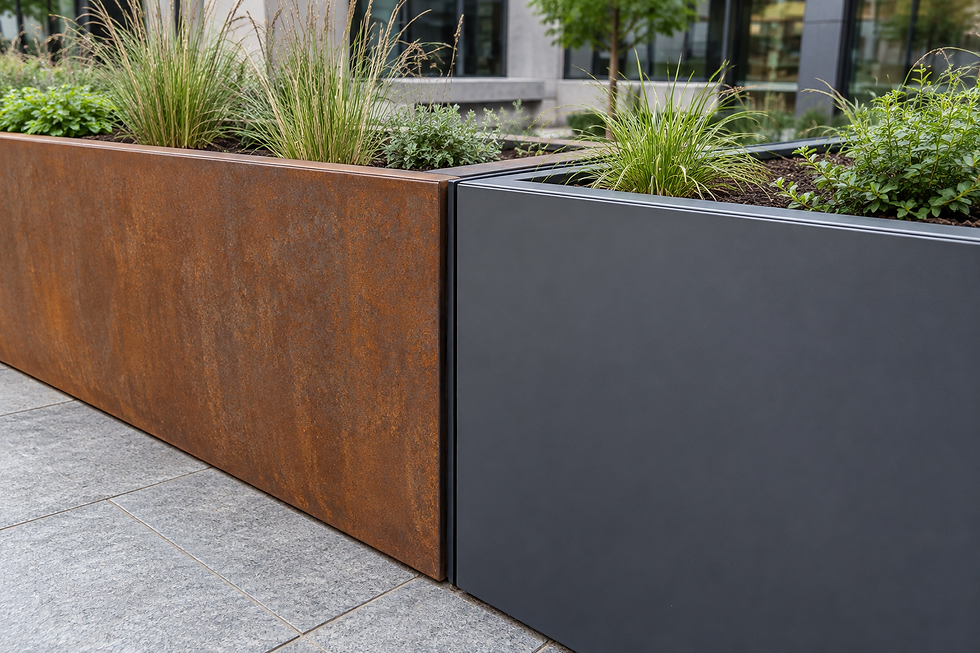
Aluminum and stainless steel meet constantly on commercial sites, through fasteners, anchors, handrails and trim. SSINA notes that when the two are coupled in wet conditions, aluminum corrodes faster than it would alone. The Steel Construction Institute adds that the result is often additional corrosion that shows as discoloration on the aluminum, more cosmetic than structural.
On bare aluminum, stainless fasteners are a small cathode in a large anode, which keeps the effect limited. SSINA still recommends neoprene or other inert washers under fasteners, and fasteners matched to the noblest metal where an electrolyte is likely.
In our metal planters, the body is 1/8 inch 5052 aluminum with a UV-resistant powder coat. The coating limits bare aluminum to the edge of each fastener hole, which is the small anode, large cathode case described above. That is why isolating washers or sleeves matter on coated aluminum. Where the whole assembly can stay in one metal, stainless steel planters with matching stainless hardware remove the pairing altogether.
Corten, Galvanized and Mixed-Material Sites
Corten weathering steel and aluminum often share a landscape plan: Corten on grade, aluminum on a rooftop where weight matters. In our Corten steel planters specification guide, we explain that where Corten meets lighter or more corrosion-resistant metals, we plan for separation layers, compatible fasteners and waterproofing protection. Corten runoff is most active in the first weeks, so keep it away from aluminum surfaces and pale paving.
Galvanized steel with stainless hardware is less of a concern. The Steel Construction Institute does not normally consider it a serious risk outside severe, marine-type environments.
Anchoring is where mixed metals sneak in: a steel anchor plate or a bolt swapped on site can create the small anode, large cathode pairing described above. Before following the anchoring sequence in our commercial planter installation guide, specify the anchor hardware material alongside the planter, not afterward.
Road Salt, Coastal Air and Canadian Winters
Galvanic corrosion needs an electrolyte, and salty water is a far better one than rainwater. Streets and plazas treated with de-icing salt, which is standard across Quebec and Ontario, keep joints wet with brine for months. The Steel Construction Institute treats marine and industrial sites as higher-risk environments than rural ones for the same reason.
Finish quality becomes part of corrosion control in these locations. On aluminum, the quality of the powder-coated finish matters: the coating goes over a conversion pretreatment, and filiform corrosion usually starts at a cut edge, scratch or fastener point, the same places where dissimilar metals meet. Some extreme locations also call for secondary coatings against salt and UV.
Urban Pot plans separation layers and compatible fasteners wherever planters meet other metals on Canadian commercial projects. Contact team@urbanpot.com for material and finish specifications.
How to Specify Against Galvanic Corrosion
The simplest approach is to settle every metal on the drawing set before procurement. Our commercial planter specification guide for architects covers the broader submittal. For corrosion specifically:
List the planter material, fastener material and anchor material together on the schedule.
Match fasteners to the noblest metal in the joint, or isolate them with non-conductive washers and sleeves.
Separate Corten or carbon steel from aluminum with a separation layer.
Detail joints to drain, so water does not sit between metals.
Note salt exposure (de-icing or coastal) so finish and coating requirements can be set.
Confirm the final material thickness on the approved shop drawings or submittal documents.
Technical data sheets for our standard aluminum and custom metal lines are in the BIM and specification library.
Maintenance That Keeps Corrosion in Check
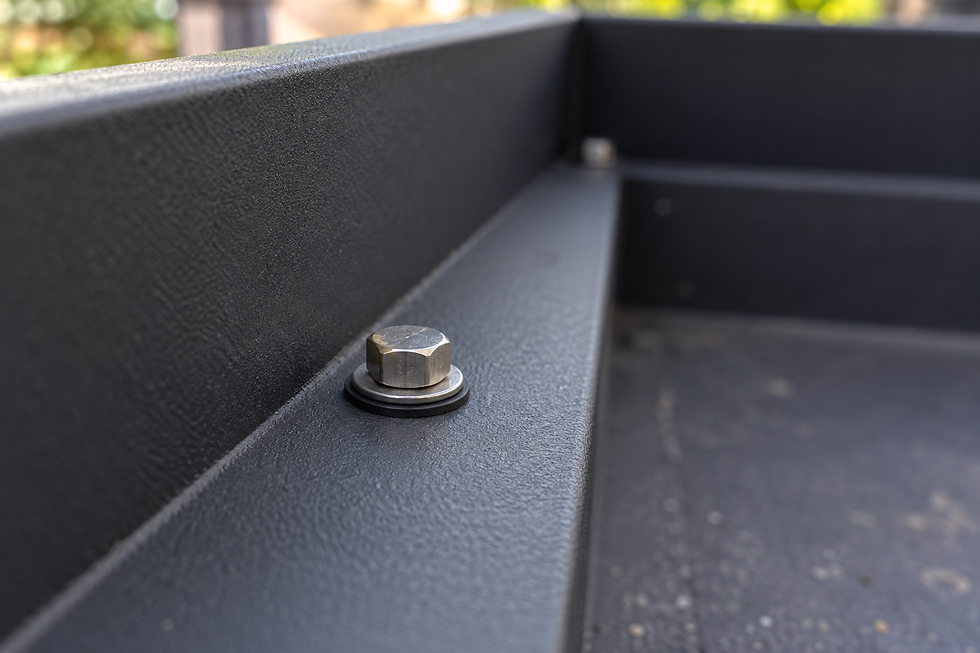
Corrosion control continues after handover. Our operation and maintenance guidelines recommend cleaning powder-coated aluminum with a soft cloth and lukewarm water, and watching for fertilizer salt build-up on the edges in summer. Rinse salt residue off planters near treated walkways each spring, and check fasteners and touch up chips before winter.
Where metal is not a requirement, fiberglass planters take galvanic corrosion out of the picture, as long as the gel coat stays intact.
Frequently Asked Question
What is galvanic corrosion?
Galvanic corrosion is the faster corrosion of one metal when it touches a different metal and water connects them. The less noble metal, often aluminum in planter projects, becomes the anode and corrodes. It needs two different metals, electrical contact and an electrolyte.
Can you use stainless steel screws in aluminum planters?
Yes, with isolation. On bare aluminum, the screws are small compared with the metal around them, which limits the effect. On powder-coated aluminum, only the edge of each hole is bare, so a small exposed anode faces a large cathode. Use neoprene or inert washers and isolating sleeves, and keep joints drained.
Does Corten steel cause aluminum to corrode?
It can, where the two touch and stay wet. Aluminum is the less noble metal, so it is the one that corrodes. Plan a separation layer and compatible fasteners at every junction, and keep Corten runoff away from aluminum surfaces.
Does road salt increase planter corrosion?
Yes. Salty water is a much better electrolyte than rainwater, so de-icing salt keeps joints between metals active for longer. Rinse salt residue each spring and specify finishes and hardware for salt exposure on Quebec and Ontario sites.
How do you prevent galvanic corrosion in planters?
Break one of the three conditions. Use the same or compatible metals, isolate fasteners and anchors with non-conductive washers or sleeves, and detail joints to drain. Settle all metals on the drawings before procurement.
Getting Galvanic Corrosion Control Right the First Time
Long-lasting metal planters are not the result of one premium material. It comes down to three things: compatible metals at every joint, isolation where different metals must touch, and details that keep water from bridging them.
Specifying these early prevents mismatched field hardware, staining on aluminum and paving, and fastener replacements a few winters in. Urban Pot works with architects and landscape contractors to settle planter, fastener and anchor materials before shop drawings are approved, whether the project calls for planters for landscapers and design-build firms or a fully custom stainless installation.


