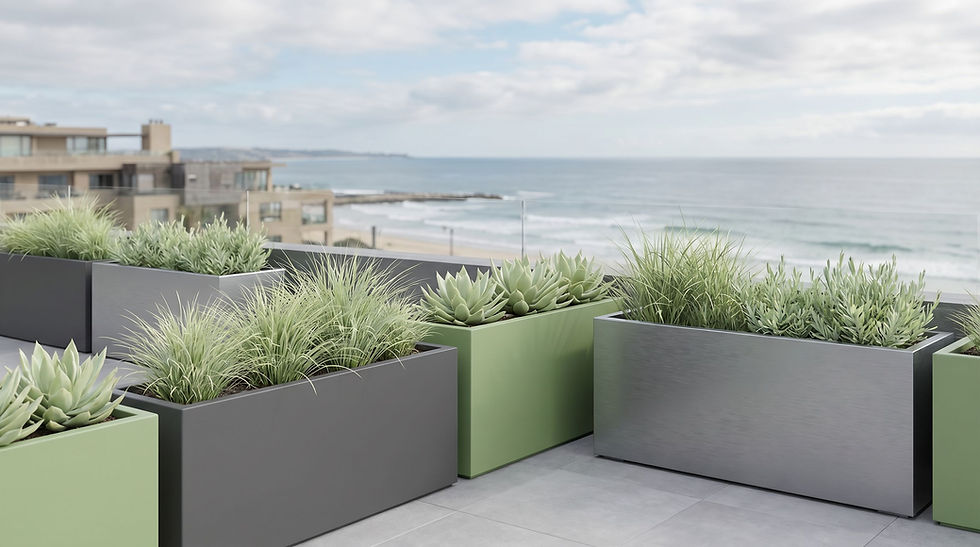
Are Metal Planters Good for Plants? Pros, Cons & Care Guide
Updated: Sep 21
Metal planters are good for most plants when a few practical details are handled correctly: heat buildup, drainage, and material choice. They're not automatically a bad option, but they behave differently from clay, wood, or plastic, and treating them the same way leads to the root damage and rust complaints that show up most often in reviews.
Urban Pot designs and manufactures metal planters for residential, commercial, and municipal projects across Canada and the United States, in aluminum, stainless steel, and corten steel. This guide answers the questions people actually ask before buying: whether metal is good or bad for plants, how hot it really gets, whether it's safe for vegetables, and which type holds up best.

Are Metal Planters Good or Bad for Plants?
Neither, on its own. Metal is a durable, pest-resistant, long-lasting planter material, and professional landscapers use it constantly for exactly those reasons. The "bad for plants" concern usually comes down to one specific issue: heat conduction. Metal transfers outdoor temperature into the soil faster than porous materials like terracotta or wood, which can stress roots in full-sun placements if the planter isn't managed for it.
In practice, metal planters work well for the large majority of outdoor and patio plants, especially when placed with some afternoon shade, lined for insulation, or filled with heat-tolerant species. They're a poor match for plants with very sensitive, shallow root systems in full, unshaded summer sun without any mitigation. For nearly everything else, metal performs at least as well as other common materials, and better than most on durability and pest resistance.
Heat Retention: What Actually Happens
This is the single most common concern with metal planters, and it deserves a direct number instead of a vague warning. That figure reflects NC State's Piedmont climate conditions; actual day/night swing will run higher or lower depending on regional sun exposure and ambient temperature, so treat 30°F as illustrative rather than a fixed number for every climate zone, including the colder Canadian markets Urban Pot serves.
The fix is straightforward and doesn't require avoiding metal altogether. University of Illinois Extension notes that dark-colored containers absorb significantly more heat than light-colored ones in direct summer sun, so finish color alone makes a measurable difference.
Beyond color, three practical steps handle most of the risk: use a plastic nursery liner inside the metal shell to create an air gap, add a layer of insulating foam or bubble wrap between the liner and the metal wall for larger planters, and place the planter where it gets some afternoon shade rather than full sun all day. Mulching the soil surface also slows moisture loss, which compounds heat stress if the soil dries out at the same time it's overheating.
Powder-coated finishes help marginally by reflecting some light, but color and placement do more of the real work than the coating itself. For anyone specifically shopping for a planter to hold heat-sensitive plants through a full-sun summer, checking the finish color before checking the material itself is often the more useful filter.
Are Metal Planters Safe for Vegetables?
Generally yes, with a couple of specific precautions worth knowing. Most metal planters, including galvanized steel and aluminum, are coated to resist corrosion, and that coating is what raises the food-safety question people are actually asking about.
Per guidance compiled by Ask Extension, part of the Cooperative Extension System, galvanized metal is coated with zinc, which can leach into soil under acidic conditions, generally below pH 6.
Most garden soil sits closer to neutral, which limits how much zinc actually releases, and zinc itself is a plant micronutrient in small amounts. The same Ask Extension guidance notes that older galvanized metal, roughly 60 years or more, is the bigger concern, since older coatings sometimes contained trace lead or cadmium that modern zinc coatings don't use.
For anyone growing vegetables in a metal planter, three practices reduce any remaining risk to essentially negligible: choose new, food-grade galvanized or powder-coated metal rather than repurposed industrial containers of unknown origin, check soil pH annually and keep it neutral rather than acidic, and use a plastic liner as an extra barrier if growing acid-loving crops specifically.
Aluminum and stainless steel don't carry the same zinc-leaching consideration at all, making them a straightforward choice for anyone who wants to avoid the question entirely.

Pros of Metal Planters
Style and customization. Metal takes powder coating well, which means a nearly unlimited color range alongside the natural finishes of aluminum, stainless steel, or corten. It suits everything from minimalist modern spaces to industrial-style patios.
Strength and longevity. Aluminum, stainless steel, and corten steel resist cracking, warping, and breaking far better than terracotta or basic plastic, and they hold their structural integrity through both hot summers and freezing winters when the right alloy is chosen. Urban Pot's durable outdoor planters guide covers material durability across a wider range of climate conditions.
Pest and rot resistance. Solid metal surfaces deter borers, termites, slugs, and other pests that target wood, and metal doesn't rot the way wood does over time.
Low maintenance. Metal planters generally need only occasional washing with mild detergent, without the resealing or repainting that wood requires.
Lightweight options. Aluminum specifically is light enough to reposition easily for seasonal changes, even in larger sizes, without sacrificing strength.
Cons of Metal Planters
Heat retention, covered in detail above, remains the most significant downside and the one most worth planning around before buying.
Corrosion risk. Aluminum and corten steel resist rust well, but prolonged exposure to moisture, fertilizer salts, or de-icing salt near sidewalks can accelerate corrosion over years. Choosing rust-resistant alloys and ensuring good drainage limits this. Urban Pot's frost-resistant planters guide covers salt exposure and drainage requirements for winter climates in more depth.
Weight when filled. Empty metal planters are often light, but a large one filled with wet soil and mature plants can become heavy fast, which matters for rooftops, balconies, or any surface with a weight limit.
Types of Metal Planters
Material | Weight | Rust Resistance | Best For | Maintenance |
Aluminum | Very light | Naturally rust-resistant | Rooftops, balconies, frequent repositioning | Low, occasional wash |
Stainless Steel | Heavier | Highly rust-resistant | Premium, high-traffic commercial settings | Low |
Corten Steel | Heavy | Develops protective rust patina | Industrial and landscape-blending designs | Very low |
Galvanized Steel | Moderate | Zinc-coated, rust-resistant | Budget-friendly outdoor and vegetable use | Low, monitor coating condition |
Note: coating quality and gauge thickness vary by manufacturer and affect real-world rust resistance and lifespan beyond what the material name alone indicates. Confirm specific product specs before ordering for coastal or high-salt-exposure sites.
Choosing the Right Metal Planter for Your Space
Rooftops and balconies with weight restrictions favor aluminum for its light weight and natural rust resistance. High-traffic commercial or hospitality settings that need a premium, polished look are well served by stainless steel, despite the higher weight and cost.
Industrial or landscape-forward designs benefit from corten steel's natural patina, which actually strengthens the material as it develops rather than weakening it. Budget-conscious vegetable gardens do well with new, food-grade galvanized steel, paired with a liner if growing acid-loving crops.
Whatever the material, drainage matters as much as the metal itself. Metal planters need drilled drainage holes since they don't absorb any water on their own, and standing water accelerates both corrosion and root rot at once.
Metal Planters Indoors vs. Outdoors
Metal planters work in both settings, but the priorities shift. Outdoors, rust resistance, drainage, and heat management matter most, since the planter faces direct sun, rain, and temperature swings with no climate control to buffer them. Aluminum and stainless steel are the safest defaults for outdoor use precisely because they sidestep most of the corrosion questions that come up with less protected metals.
Indoors, heat buildup is rarely a concern since indoor light and temperature stay far more stable than direct outdoor sun, and there's no rain or snow to manage. The main consideration shifts to protecting floors and furniture from moisture, since indoor metal planters still need proper drainage and typically benefit from a saucer or tray underneath to catch runoff.
Indoor metal planters can use finishes that wouldn't hold up outdoors, including unsealed brass, copper, or unfinished steel, since they're not exposed to weather that would accelerate tarnishing or rust.
Common Questions About Buying Metal Planters
A few practical details come up often enough to answer directly, beyond the core good-or-bad and safety questions above.
Size and weight planning. A metal planter that seems easy to lift empty can become genuinely heavy once filled, particularly in larger diameters. For rooftop or balcony installations, confirm the structure's weight capacity before ordering, accounting for saturated soil weight, not just the dry planter and soil combined.
Matching metal to plant type. Heat-tolerant plants like succulents, ornamental grasses, and Mediterranean herbs handle the temperature swings of metal containers better than moisture-loving, shallow-rooted plants like ferns or hostas. Matching plant choice to container material reduces how much mitigation, like liners or shade, is actually needed.
Powder coat versus raw finish. A powder-coated finish adds a layer of protection against both corrosion and, to a lesser degree, heat absorption if a lighter color is chosen. Raw or unfinished metal develops its own patina over time, which some designs specifically want, but it offers less protection than a factory finish in high-moisture or coastal environments.
Frequently Asked Questions
Are metal planters good for plants?
Yes, for most plants, as long as heat buildup is managed through placement, color, or a liner. Metal is durable and pest-resistant, with heat retention as the main tradeoff to plan around.
Are metal planters safe for vegetables?
Generally yes. New, food-grade galvanized or powder-coated metal poses minimal risk, since zinc leaching is limited in neutral soil. Aluminum and stainless steel avoid the question entirely.
How hot do metal planters get?
Soil temperature in a metal pot can swing by up to 30°F between day and night in direct sun. Light-colored finishes, shade, and an insulating liner reduce this significantly.
Do metal planters rust?
Aluminum and stainless steel resist rust well. Galvanized and corten steel are designed to develop a protective coating or patina, though prolonged salt or moisture exposure can accelerate wear over years.
How do I add drainage holes to a metal planter?
Use a sharp metal drill bit with a center punch to mark the spot first, then drill slowly with 4 to 6 evenly spaced holes for adequate drainage.
Can metal planters be used indoors?
Yes. Indoor use removes most of the heat and rust concerns tied to weather exposure, though drainage and a protective tray for floors still matter.
Choosing Metal Planters That Work for Your Plants
Metal planters are a genuinely good choice for most gardens and commercial spaces, not a risky one, once heat retention and drainage are planned for rather than ignored. Aluminum, stainless steel, corten, and galvanized steel each suit different priorities, from lightweight rooftop use to budget vegetable gardening to premium commercial installations.
Urban Pot builds metal planters in each of these materials for residential, commercial, and municipal projects across Canada and the United States, with guidance available for matching the right alloy and finish to a specific site.