

Deck Privacy Planters: Designing Green Privacy Screens for Decks and Balconies
- Feb 6
- 8 min read
Updated: Feb 10
Key Takeaways
🌿 A Dual-Purpose Solution: Privacy planters do more than just block unwanted views; they transform structural barriers into living green screens that mitigate wind, reduce noise, and soften the urban landscape.
High-Performance Materials:
Marine-Grade Aluminum: The gold standard for rooftops and balconies where dead-load limits are a priority—lightweight and zero-corrosion.
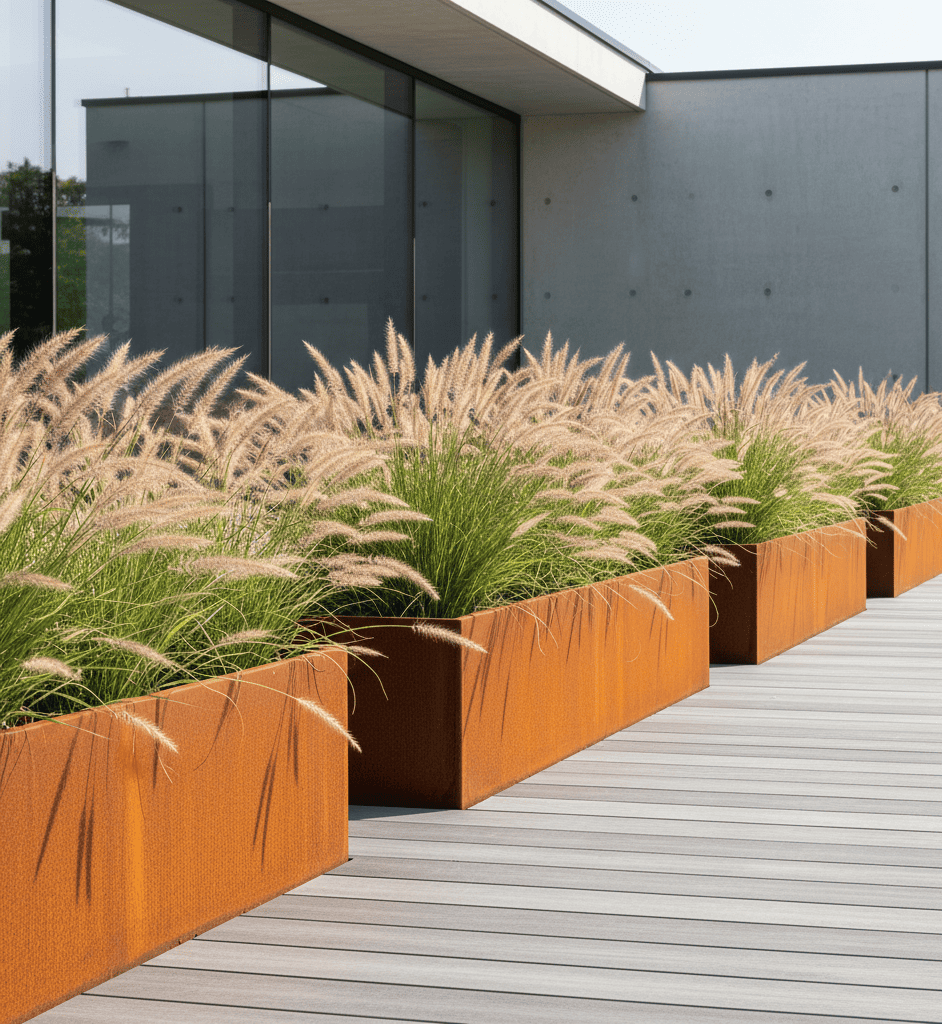
Corten Steel: Ideal for an indestructible, organic aesthetic that develops a self-protecting patina over time.
Strategic Plant Selection: Focus on clumping bamboos (Fargesia) for dense, non-invasive evergreen height, or ornamental grasses for vertical texture and superior wind tolerance.
Smart Engineering: Eliminate the risk of "overpotting" and waterlogged soil with Urban Pot’s internal shelf systems (false bottoms). This allows for tall, impactful planters while maintaining the ideal soil depth for root health.
Safety & Wind Stability: For high-rise installations, prioritize safety using low-and-wide profiles, internal ballast chambers, and hidden anchoring brackets to withstand heavy gusts.
Architectural Customization: Match any building façade with durable RAL powder coatings, anti-graffiti finishes, and salt-resistant alloys designed for demanding coastal or urban environments.

Why Deck Privacy Planters Make Sense
Balcony living often comes with unwanted views: neighbours peering in, busy streets below, wind sweeping across your outdoor room. Traditional fencing can appear heavy or trigger building code requirements. Deck privacy planters solve this elegantly: they use living plants to create a barrier, double as design elements, and can often be designed to comply with typical strata or HOA requirements; always confirm with your building’s rules. In the first ten seconds of a client consultation, we explain that custom planters can raise the effective railing height, mitigate wind, and provide lush greenery, often without drilling into structural posts. That’s the searcher’s intent: a practical yet sophisticated solution.
Material Choices That Dictate Lifespan
Aluminum vs. Corten vs. GFRC vs. Timber
Material | Weight / Structural Load | Durability & Weathering | Insider Insight |
Marine‑grade aluminum | approx 1/3 weight of steel: ideal for rooftop decks where dead‑load limits apply. | Resists corrosion and accepts powder coating; available in any RAL colour for long‑term UV protection. | Use 5052 or 6061 alloys and specify ≥1/8 in thickness on planters over 24 in high to prevent oil‑canning. |
Corten steel (weathering steel) | Heavy; suitable when the weight stabilises planters against wind. | Develops a stable rust‑patina that protects against corrosion and can perform well through freeze–thaw cycles when properly detailed with drainage and reinforcement. | Leave a ¼ inch gap from light‑coloured surfaces and seal decks because rust runoff may stain; use 1⁄8 in or thicker panels above 36 in to prevent oil‑canning. |
Glass‑Fiber‑Reinforced Concrete (GFRC) | 45–60 % lighter than solid concrete; still heavy enough for stability. | Thin‑walled (25–30 mm) panels reinforced with glass fibres have low absorption and are highly resistant to water ingress; our GFRC is engineered for freeze–thaw performance, while standard precast concrete can crack in cold climates. | Provide structural engineers with both dry and saturated weights, and ensure precast drainage holes. Urban Pot’s internal shelf systems (false bottoms) allow tall planters to maintain height while reducing soil volume and preventing waterlogging. |
Timber (e.g., cedar) | Light to medium weight. | Contains natural preservatives that resist rot and insects; it weathers to silver‑grey if left untreated, but timber requires regular maintenance and can warp or rot over time. | Apply a breathable sealant annually and allow for expansion gaps; ideal for residential decks where a warm, textured look is desired. |
Tip: When specifying planters for high‑rise balconies, we often combine materials: an aluminum trough for weight reduction, topped with a Corten fascia for aesthetics, giving the visual warmth of steel without overwhelming the structure.
Planter Styles for Privacy Screens
Height and Proportion
Your planter must meet or exceed eye‑level when planted. For most residential railings around 42 in (1.07 m) high, a 30–36 in tall planter filled with a 2–3 ft plant creates a continuous screen. Trough‑style planters allow staggered groupings with overlapping foliage. Corner modules anchor ends and hide structural posts.
Tall, narrow planters look elegant but raise the center of gravity. To mitigate tipping, choose low‑and‑wide profiles as recommended in the wind‑resistance guide. For long spans, we design modular boxes that interlock, distributing wind loads across the deck surface.
Integrating Planters into Deck Design
Deck‑edge planters: installed flush with the railing; they free up interior space and create a seamless green parapet. We often fabricate these in aluminum or GFRC with integrated brackets that bolt through deck joists.
Free‑standing troughs: ideal for renters; they sit behind the railing and can be moved. Anchor them using hidden brackets or weighted bases, especially on windy balconies.
Multi‑level units: stack planters of varying heights to create rhythm and allow for layering of plants; lower boxes hold ornamental grasses while upper boxes support taller bamboos.
For product inspiration, browse our deck planters and privacy planters collections. These pages showcase how materials and dimensions can be customised to specific railing heights and architectural styles.

Selecting Plants for Privacy
Bamboo for Decks
Clumping bamboos provide height without invasive rhizomes. Fargesia dracocephala ‘Rufa’ reaches 1.5–2 m and stays evergreen with apple‑green leaves. For taller screens, choose Fargesia robusta ‘Campbell’ or hybrid varieties such as ‘Black Pearl’. Even species from the Semiarundinaria genus grow gracefully in containers. To succeed:
Use large containers with an inner diameter of ≥50 cm and insulate the sides to protect roots from winter cold.
Avoid standard potting soil; mix special bamboo substrate with hydro‑grains and top with bark mulch for insulation.
Fertilise 2–3 times per year and ensure ample water; consider drip irrigation for high balconies.
Winter tip: Evergreen bamboos can dry out if the root ball freezes, so water during mild spells.
Ornamental Grasses & Supporting Plants
Grasses offer movement and seasonal interest. Fountain grass (Pennisetum) provides feathery plumes; Blue fescue forms compact blue mounds; many grasses are drought‑tolerant once established and deer‑resistant. For containers:
Choose large, deep pots for tall grasses to ensure root space and prevent tipping.
Use lightweight, well‑draining media and ensure drainage holes are present. Water deeply and allow the soil to dry slightly between waterings.
Combine grasses with flowering perennials (such as daylilies or lavender) or evergreen shrubs (boxwood, dwarf junipers) to create layered texture. For windy roofs, select flexible species such as fountain grass that bend rather than break.
Getting the Size Right: Avoid Overpotting
A common mistake is specifying planters far larger than the current root system. Oversized planters can cause soil compaction and root rot. The Royal Horticultural Society advises moving up only 2.5–5 cm (1–2 in) in diameter when repotting. Houseplant experts echo this rule, suggesting a two‑inch increase to prevent waterlogging. For privacy screens, start with planters that comfortably fit the root ball plus 5–10 cm of room; expand gradually as plants mature. For large-scale commercial installations, we build internal shelf systems (false bottoms) that reduce soil volume. A 36-inch-tall privacy planter might hold only 18 inches of soil, preventing waterlogging while maintaining the desired exterior height.
Wind & Safety: Anchoring Techniques
Balconies and rooftop decks are exposed to gusts. Our wind‑resistant planter design emphasises heavy materials, low centers of gravity, and aerodynamic shapes. Here’s a checklist for securing planters:
Select heavy or ballast‑ready materials: choose concrete, Corten or metal with ballast chambers. Add gravel or crushed stone inside hidden chambers or at the base to lower the centre of gravity.
Anchor physically: use flange anchors bolted through deck joists, mechanical expansion bolts into concrete slabs, or chemical anchors for masonry. Hidden brackets beneath the planter lip maintain the aesthetic.
Add straps or brackets: integrate discreet tie‑downs that wrap around planters and attach to railings or structural members.
Group planters: connecting multiple planters distributes wind loads and creates a contiguous barrier.
Maintain drainage: clear drainage holes regularly to prevent water accumulation that destabilises heavy boxes.
Monitor conditions: inspect anchors and weight distribution, adjust ballast, and prune plants to maintain balance.
Drainage & Root Health
Proper drainage is critical for container plants. Advanced planter systems install drains along walls rather than at the bottom, encouraging slow water flow and allowing sediment to settle before exiting. Use three‑layer drain pads and choose the right liner shape and material. Many plant deaths result not from underwatering but from poor drainage. For winter climates, choose frost‑resistant planters such as Durastone that are porous and prevent water buildup, or specify high‑quality metal or concrete planters engineered to withstand freeze-thaw cycles.
Finishes & Customization: RAL Colours and Protective Coatings
Architects often view planters as architectural elements. Powder‑coated finishes allow them to match building façades. RAL colour systems ensure consistency, and super-durable powder coatings provide excellent UV protection and recoatability. We offer semi‑matte, metallic, textured, or special-finish options and can integrate anti‑graffiti coatings or clear anti‑decay seals, such as those used on Hostile Vehicle Mitigation planters.
Insider Tips from Urban Pot
Don’t under‑estimate root ball expansion. When specifying bamboo or grasses, allow for root growth but don’t oversize; use liners with internal reinforcement ribs for planters deeper than 24 in to prevent bulging.
Combine screening with bioretention. Custom planters can integrate bioretention media and drainage systems. High‑quality metal or concrete planters resist warping and cracking under constant wetting and freezing, making them ideal for stormwater management on roof decks.
Check building load capacity. GFRC or aluminum reduces structural load; always provide the dry and saturated weights to structural engineers.
Plan irrigation early. Drip lines built into the planter lip reduce maintenance and deliver water directly to the roots. In freezing climates, install shut‑off valves and drain lines in autumn to prevent burst pipes.
Schedule maintenance. Inspect anchor hardware annually, top up ballast and replace worn hardware; prune or replace plants every few years to maintain density.
Conclusion: Turn Your Balcony into a Green Refuge
By thoughtfully combining materials, dimensions, plants, and anchoring, deck privacy planters create intimate outdoor rooms without sacrificing design. Aluminum and GFRC keep structures light while steel and concrete provide stability. Clumping bamboos and ornamental grasses give vertical screening and seasonal interest; RAL powder coatings and anti‑graffiti seals keep planters looking pristine for years. At Urban Pot, we collaborate with architects and homeowners to design bespoke privacy screens that perform technically and delight aesthetically. Designing for a rooftop? Download our Weight & Ballast Spec Sheet to understand load and ballast requirements.
Ready to transform your balcony? Request a custom quote and let’s craft the perfect green screen together.
Frequently Asked Questions about Deck Privacy Planters
1. How can I prevent my deck privacy planters from tipping over in high winds?
To prevent tipping, we recommend a low-and-wide planter profile to lower the center of gravity. For high-rise balconies or windy rooftops, Urban Pot engineers planters with internal ballast chambers to add weight at the base without affecting soil volume. Additionally, using hidden anchoring brackets or bolting planters directly to deck joists ensures maximum stability during extreme weather without compromising the architectural design.
2. Which is the best lightweight material for high-rise balcony planters?
Marine-grade aluminum is the best material for high-rise balconies where structural "dead-load" limits are a concern. It is approximately one-third the weight of steel, yet offers 100% corrosion resistance. For those seeking a stone aesthetic, Glass-Fiber Reinforced Concrete (GFRC) is an excellent lightweight alternative, providing the massive look of concrete at 45–60% less weight than traditional precast options.
3. What are the best plants for year-round privacy in containers?
For evergreen privacy, clumping bamboos like Fargesia are the top choice because they are non-invasive and maintain dense foliage throughout the winter. Ornamental grasses (such as Fountain Grass or Blue Fescue) are also excellent for their wind tolerance and vertical texture. For successful year-round screening in cold climates, we recommend using insulated planters to protect the root systems from harsh freeze-thaw cycles.
4. Can I use tall privacy planters on a balcony without adding too much weight?
Yes. You can achieve significant height without excessive weight by using internal shelf systems (false bottoms). This Urban Pot feature allows a 36-inch-tall planter to appear substantial while holding only 18–20 inches of soil. This reduces the overall weight on the balcony and prevents "overpotting," which can lead to waterlogged soil and root rot.
5. Do Corten steel planters cause rust stains on deck surfaces?
Corten steel develops a beautiful, self-protecting patina, but initial weathering can lead to rust runoff. To avoid staining, we suggest leaving a 1/4-inch gap beneath the planter or using a protective tray. For a maintenance-free alternative, Urban Pot can pre-weather the steel to minimize runoff, or provide aluminum planters with a Corten-look powder coat, offering the same organic aesthetic with zero staining risk.


