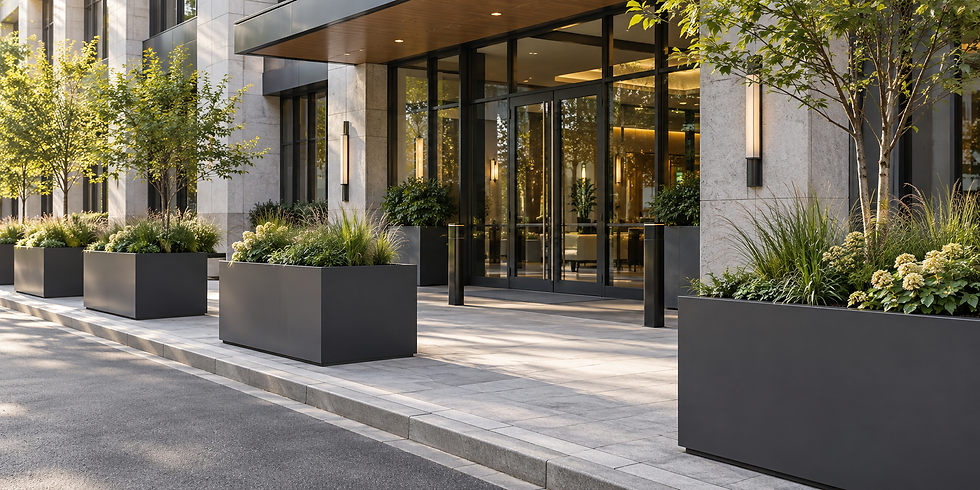
The ROI of Bioretention Planters: Managing Stormwater with Green Infrastructure
Urban environments across North America are facing increasing pressure from extreme weather, aging infrastructure, and stricter stormwater regulations. Heavier rainfall events overwhelm traditional drainage systems, while dense development leaves little room for large-scale green infrastructure.
Bioretention planters offer a compact, effective, and measurable solution. Designed to capture, filter, and manage stormwater at the source, these systems combine engineered planters with soil media and vegetation to deliver both environmental and financial returns.
For developers, municipalities, and commercial property owners, bioretention planters are not just a sustainability feature—they are a strategic investment with a clear return on investment (ROI).

What Are Bioretention Planters?
Bioretention planters are engineered planting systems designed to manage stormwater runoff in constrained urban settings. Often described as rain gardens in a box, they function by directing runoff from roofs, streets, or paved areas into a planter where water is temporarily stored, filtered, and either infiltrated or slowly released.
Unlike traditional landscaping, bioretention planters are purpose-built systems that integrate:
Controlled ponding zones
Specialized soil and filtration media
Drainage or overflow components
Carefully selected plant species
Because they are self-contained, bioretention planters can be installed in areas where in-ground systems are not feasible—such as sidewalks, plazas, rooftops, and dense commercial sites.
Why Bioretention Planters Deliver Strong ROI
1. Reduced Stormwater Infrastructure Costs
Managing runoff at the source reduces the volume of water entering municipal storm sewers. This can lower requirements for underground piping, detention tanks, or off-site stormwater mitigation.
For many projects, bioretention planters help:
Reduce stormwater connection fees
Offset the need for oversized drainage infrastructure
Meet regulatory requirements without sacrificing buildable area
Over the lifecycle of a development, these cost savings can be substantial.
2. Efficient Use of Limited Urban Space
In dense urban environments, space is one of the most expensive resources. Bioretention planters maximize performance per square foot by combining landscape, infrastructure, and stormwater management into a single element.
Because they are modular and customizable, custom planters can be designed to fit site constraints while meeting specific hydraulic and structural requirements.
This flexibility allows projects to achieve compliance without compromising layout, circulation, or architectural intent.
3. Long-Term Durability = Lower Lifecycle Costs
The ROI of bioretention planters is closely tied to the performance of the materials used. Systems exposed to constant moisture, freeze-thaw cycles, and soil pressure require robust construction.
High-quality metal planters and concrete planters offer long-term structural integrity and resistance to warping, cracking, and degradation—particularly important in climates with harsh winters and hot, humid summers.
When designed correctly, a bioretention planter can perform for decades with minimal maintenance, dramatically lowering the total cost of ownership compared to lower-grade alternatives.
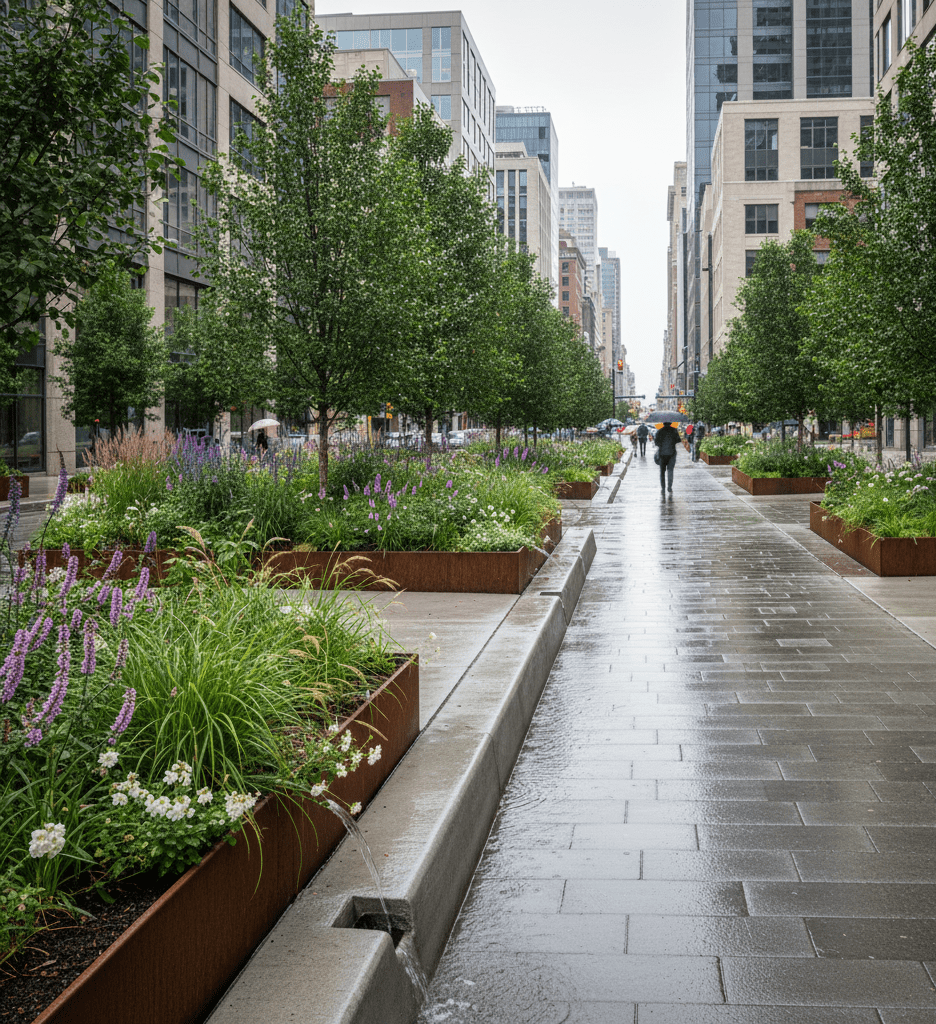
Environmental ROI: Performance That Pays Back
Improved Stormwater Quality
Bioretention planters filter runoff through soil and plant roots, removing sediment, nutrients, and pollutants before water enters downstream systems. This improves local water quality and supports broader watershed health—an increasingly important metric for public and institutional projects.
Reduced Flooding and Peak Flow
By temporarily storing runoff during rain events, bioretention planters reduce peak flow rates. This helps prevent localized flooding, protects hardscape and building foundations, and reduces stress on municipal systems.
Urban Heat Mitigation
Vegetated planters contribute to cooling through shade and evapotranspiration. In commercial districts, this can improve outdoor comfort, reduce heat buildup around buildings, and enhance the overall usability of public spaces.

Economic & Social Value Beyond Stormwater
Enhanced Property Value and Marketability
Well-designed green infrastructure signals quality, resilience, and long-term thinking. Bioretention planters enhance curb appeal and create attractive outdoor environments—factors that influence leasing decisions, tenant satisfaction, and property value.
These benefits are evident in commercial and municipal projects where public perception and long-term asset value matter.
Health, Well-Being, and User Experience
Green spaces contribute to psychological comfort, reduced stress, and improved user experience. Bioretention planters transform stormwater infrastructure into visible, human-scale amenities—an essential advantage over hidden or purely technical solutions.
Design Considerations That Protect ROI
To maximize performance and long-term value, bioretention planters must be carefully designed. Key considerations include:
Drainage strategy: infiltration vs. filtration systems
Soil media composition: balancing permeability and pollutant capture
Plant selection: species adapted to wet/dry cycles and local climate
Overflow management: controlled bypass during extreme events
Structural design: accommodating saturated soil loads
Cutting corners at the design stage can compromise performance and increase maintenance costs—directly impacting ROI.

Built for North American Climate Extremes
A critical factor in long-term ROI is climate resilience. Bioretention planters used across North America must withstand:
Freeze–thaw cycles and snow loads in Canadian winters
Intense rainfall and humidity in the Southern United States
UV exposure and thermal expansion across all regions
Engineered planter systems designed for these conditions maintain their performance and appearance year after year, protecting the original investment.
Where Bioretention Planters Make the Most Sense
Bioretention planters are particularly effective in:
Urban streetscapes and sidewalks
Commercial plazas and office campuses
Multi-residential and mixed-use developments
Institutional and civic projects
Rooftop terraces and podium decks
Their adaptability makes them a practical solution for both new construction and retrofits.
Conclusion: A Smart Investment in Resilient Cities
Bioretention planters deliver measurable ROI by addressing stormwater challenges at the source—reducing infrastructure costs, improving environmental performance, and enhancing the value of built environments.
By combining engineered design, durable materials, and thoughtful integration, these systems turn a regulatory requirement into a long-term asset. For cities and property owners planning for resilience, performance, and longevity, bioretention planters are among the most effective green infrastructure investments available today.
FAQ: Bioretention & Commercial Planters
1. What is the difference between a standard planter and a bioretention planter?
A standard planter is designed primarily for plant health and aesthetics. A bioretention planter is a functional engineering tool. It features specialized "engineered soil" that filters pollutants, a "ponding zone" to temporarily hold stormwater, and specific drainage layers (such as gravel and underdrains) to manage high water volumes that would overwhelm a typical pot.
2. Can Urban Pot custom-fabricate planters to meet specific municipal stormwater codes?
Absolutely. Because Urban Pot is a leader in custom North American fabrication, we can adjust the height, internal volume, and drainage outlet placement of our metal or concrete planters to meet the exact "drawdown" and "ponding" requirements specified by your city’s civil engineers.
3. How do these planters contribute to LEED certification?
They primarily earn points under the Sustainable Sites (SS): Rainwater Management category. By replicating natural hydrology and managing on-site rainfall within the 85th–95th percentile, they help projects meet green building standards while providing a visible biophilic amenity for occupants.
4. Will the weight of a bioretention system be too heavy for my rooftop or balcony?
Bioretention soil is heavy, especially when saturated. However, Urban Pot specializes in lightweight, high-strength materials like marine-grade aluminum and fiberglass. We also include internal structural bracing to prevent bowing. We recommend consulting with a structural engineer to confirm your roof’s load capacity, and we can provide the "wet weight" specs of our planters to assist.
5. Do bioretention planters require more maintenance than traditional landscaping?
The maintenance is similar but focused on "flow." In addition to standard weeding and pruning, you must occasionally clear debris (litter or leaves) from the inlets and outlets to ensure water can enter and exit the system. You should also inspect the surface mulch annually to ensure it hasn't become clogged with fine sediment, which can slow down infiltration.