

The ROI of Bioretention Planters: Managing Stormwater with Green Infrastructure
- Charles Gaudiot

- 3 hours ago
- 8 min read
Urban areas increasingly face the twin challenges of extreme weather and aging infrastructure. Frequent downpours overwhelm storm drains while prolonged heat waves bake surfaces and degrade air quality. Bioretention planters—sometimes called “rain gardens in a box”—offer a scalable solution. These vegetated planters collect, filter and, in many cases, infiltrate runoff from impervious surfaces such as roofs, streets and parking lots. By mimicking natural hydrologic processes in a compact footprint, bioretention planters provide measurable environmental benefits and a strong return on investment for property owners.

What Is a Bioretention Planter?
The concept of bioretention originated in low‑impact development to manage stormwater in limited space. A bioretention planter typically consists of a depression filled with engineered soil and plants, topped with mulch and sometimes underlain by a gravel storage layer. Runoff is diverted to the planter, where it temporarily ponds; the planting zone filters pollutants and supports vegetation while the underlying mix stores and infiltrates water. The California Stormwater Quality Association (CASQA) notes that these systems are often unlined to allow infiltration into native soils. However, a perforated underdrain may be used in lined systems where infiltration is undesirable.
Two main types exist:
Infiltration planters. These systems cleanse, detain, and reduce runoff volumes by allowing stormwater to soak into surrounding soils. They are unlined and ideal when site conditions permit infiltration extension.
Filtration planters. These planters cleanse and detain runoff but do not significantly reduce volumes because they are lined; treated water is discharged via pipe, making them suitable for sites with contaminated soils or high ground water
Source : Oregon State University
Environmental Benefits
Cleaner Water and Reduced Runoff
Bioretention planters treat stormwater through a combination of physical, chemical, and biological processes. They filter sediment and pollutants through soil media, adsorb metals onto soil particles and mulch, and uptake nutrients through plant roots. According to the American Society of Landscape Architects (ASLA), bioswales and bioretention ponds dramatically reduce pollutants and contaminants, enhancing water quality. The Environmental Protection Agency (EPA) estimates that stormwater runoff accounts for 70 % of water pollution in rivers and lakes. Integrating bioretention planters can significantly cut this load.
Runoff volume reduction is equally significant. A typical four‑meter vegetated swale reduces approximately 25 % of total rainfall runoff. While swales require horizontal space, bioretention planters achieve similar hydrologic benefits in a compact footprint. Monitoring of four flow‑through bioretention planters over 15 months found that 38 % of rain events produced no measurable outflow—meaning the planters captured the entire storm. When outflow did occur, the median lag time before discharge was 77.5 minutes, giving downstream systems time to handle the flow (spmc.ncbi.nlm.nih.gov).
Groundwater Recharge and Urban Heat Relief
Infiltration planters allow stormwater to percolate into native soils, recharging groundwater aquifers. This is critical in regions where groundwater is over‑pumped or where drought reduces surface supplies. Even lined filtration systems benefit groundwater indirectly by slowing and cooling runoff before discharge.
Vegetation in bioretention planters also moderates microclimates. Dense plantings increase evapotranspiration, which cools the surrounding air, and provide shade for pedestrians. Larger planters can incorporate trees and shrubs that sequester carbon, attract pollinators, and create small urban habitats. These ecological services contribute to urban resilience and support biodiversity.
Strategic Compliance: LEED Credits and Economic Value
Beyond environmental performance, bioretention planters serve as a critical tool for developers seeking to meet rigorous North American building standards. Under the LEED v4.1 Rainwater Management credit, projects can earn significant points by using green infrastructure to replicate natural site hydrology. Urban Pot’s bioretention systems are specifically engineered to help projects manage the 85th, 90th, or even 95th percentile of local rainfall events, directly contributing to certification.
This compliance offers a dual economic advantage: it helps navigate increasingly strict municipal stormwater bylaws while simultaneously increasing the asset's marketability. Research indicates that LEED-certified buildings often command higher occupancy rates and a "green premium" on rent. By integrating functional bioretention into high-traffic plazas or rooftop terraces, owners transform a required utility into a visible site amenity that supports both the planet and the project’s bottom line.
Designing Successful Bioretention Planters
Site Analysis and Goals
Effective design begins with clear objectives. ASLA’s professional practice notes that bioretention projects typically have two primary goals: pollution reduction and flow control. The hydraulic regime—how frequently and how much a planter floods—should match plant tolerance. Designers should also consider context: urban street corners require low plantings for visibility, while larger sites can accommodate taller vegetation.
When planning a bioretention planter, evaluate:
Contributing drainage area: Larger roofs or pavements may necessitate multiple planters or integration with bioswales
Soil type and infiltration capacity: Clay soils may require lined planters with underdrains, while sandy soils facilitate infiltration
Hydraulic soil group and drawdown time: CASQA recommends designing the media to drain within 24–48 hours to prevent standing water and mosquito breeding.
Maintenance access and plant selection: Accessibility is key for removing litter, pruning plants, and monitoring outlets.
Choosing the Right Plants
Plant selection drives the long‑term performance and maintenance costs of bioretention systems. According to ASLA’s The Field, plants in bioretention facilities serve multiple functions: they minimize erosion, enhance infiltration, control weeds, and provide aesthetic value. Successful plant palettes share several characteristics:
Tolerant of flooding and drought. Plants must endure periodic inundation and dry spells. Designers should prioritize species that grow taller than the high‑water level and can tolerate sediment loading at inlets.
Robust, upright habit. Dense foliage and vertical form slow water flow and protect soil.
Dense, fibrous roots. Deep root networks promote infiltration and keep soils loose.
Year‑round coverage. Evergreens or grasses left uncut over winter maintain coverage and reduce erosion.
Native plants are often the best choice because they are adapted to local conditions and support wildlife. However, ornamental species adapted to urban conditions can also perform well. Regardless of species, planters should be installed at densities that achieve ground coverage within two years, reducing weed invasion.
Materials and Construction
Bioretention planters must withstand continual wetting and drying, sediment loading, and freeze‑thaw cycles. Durable materials such as powder‑coated steel, stainless steel or reinforced concrete provide structural integrity. Wood planters may be lined with plastic but require more maintenance and have a shorter lifespan.
Urban Pot offers a range of metal planters and concrete planters that can be adapted for bioretention use. Our custom planters can incorporate underdrains, ponding zones and overflow structures to meet local stormwater requirements while maintaining a refined aesthetic. For rooftop applications, rooftop planters engineered for high wind and load conditions can double as bioretention cells, capturing runoff and reducing HVAC load through evaporative cooling.
Installation and Maintenance
Proper installation is critical. CASQA advises stabilizing the drainage area during construction to prevent sediment clogging. The bioretention mix and gravel layers must be correctly graded and compacted to ensure uniform flow. After planting, a period of temporary irrigation helps establish roots, especially in climates with dry seasons.
Long‑term maintenance includes:
Plant management: Promote desired species and remove invasive volunteers; maintain plant density to suppress weeds.
Mulching: Top up mulch annually to protect soil and retain moisture.
Litter and debris removal: Keep inlets and outlets clear to prevent blockage.
Monitoring: Inspect for standing water; if water persists, the top media layer may need to be replaced.

Bioretention Planters in Urban Landscapes
Streetscapes and Medians
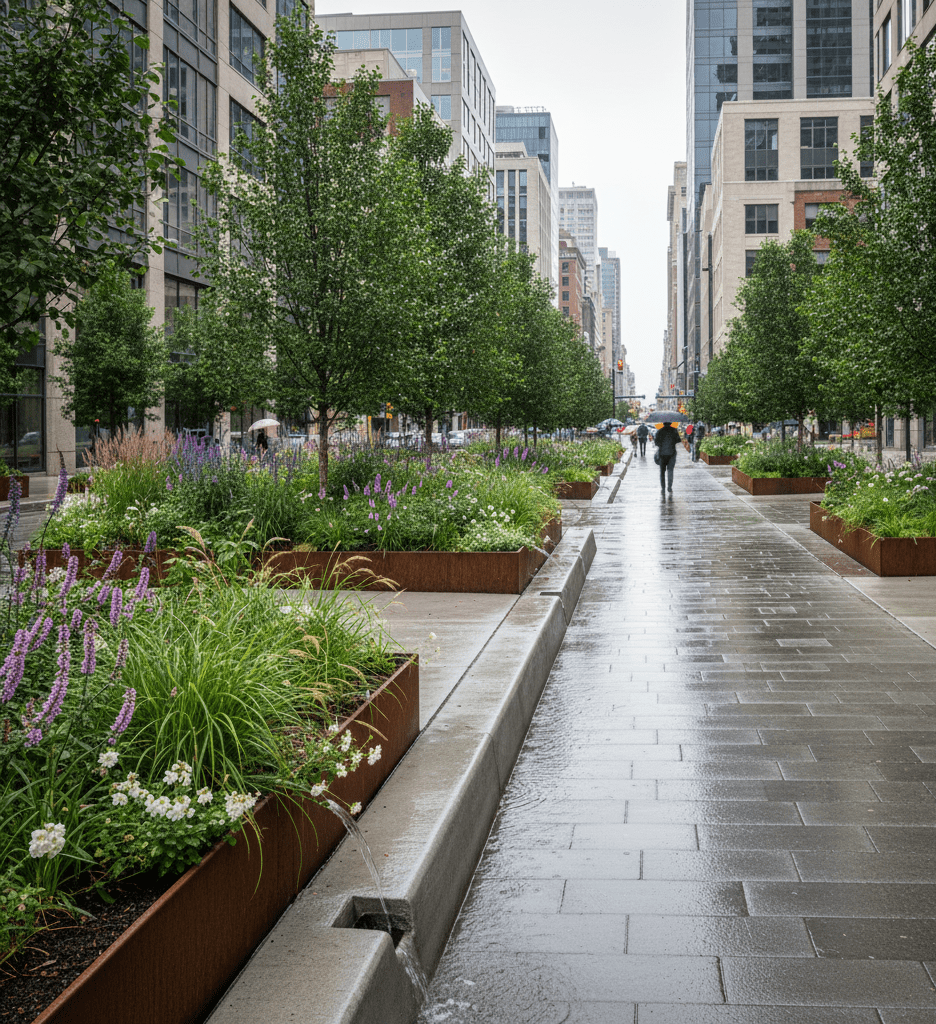
Bioretention planters are well-suited to retrofitting urban streets because they handle runoff from adjacent pavements without requiring large footprints. Curb extensions and sidewalk planters collect water from gutters while providing traffic calming and green space. The NE Siskiyou Green Street project in Portland replaced a parking area with stormwater curb extensions, disconnecting the street’s runoff from the combined sewer system and managing it through landscape. Similar projects demonstrate that green infrastructure can enhance streetscape aesthetics while reducing flooding.
Plazas and Courtyards
Commercial plazas and courtyards can integrate bioretention planters into seating areas and pedestrian circulation. Using large, modular planters allows designers to create flexible layouts and ensure accessible maintenance. Urban Pot’s rectangle planters and square planters provide ample root space and can be customized with integrated seating or lighting.
Rooftops and Condos
Green roofs are gaining popularity for their ability to mitigate stormwater and reduce building energy use. In high‑density cities, rooftop planters function as miniature bioretention systems, slowing runoff and providing outdoor amenity space. Bioretention planters may be integrated into podium decks or condo terraces to meet local stormwater requirements. Research shows that rooftop greenery reduces stormwater runoff and improves mental health. Using lightweight materials such as fiberglass or aluminum ensures the structural load capacity is not exceeded. Urban Pot’s fiberglass planters are weather-resistant and can be custom‑fitted with underdrains for rooftop applications.

Future Trends and Innovation
Advancements in sensor technology and automation are enhancing the performance of bioretention systems. Smart planters equipped with moisture sensors and remote monitoring can optimize irrigation and provide early warning of clogging or overflows. Data from sensors allows facility managers to adjust maintenance schedules and demonstrate compliance with stormwater permits. Additionally, research into alternative media blends—such as biochar and expanded shale—aims to improve pollutant removal and reduce weight for rooftop installations.
Bioretention planters also offer opportunities for community engagement. Urban agriculture initiatives can incorporate edible plants and pollinator gardens into bioretention cells, providing educational opportunities while managing stormwater. Public art and interpretive signage can highlight the function of these planters, raising awareness of water quality and sustainability.
Conclusion
Bioretention planters represent a powerful tool in the urban planner’s toolkit. By capturing and treating stormwater where it falls, they reduce pollution, mitigate flooding and replenish groundwater. When designed with attention to site conditions, plant selection and durable materials, these systems provide long‑term value that far exceeds their initial cost. They enhance property values, contribute to occupant well‑being and support urban resilience. As climate extremes intensify and regulations tighten, investing in bioretention planters today is not only environmentally responsible but economically wise.
For customized bioretention planters that integrate seamlessly with your architecture, explore Urban Pot’s range of commercial planters and consult our experts to design a system tailored to your site.
FAQ: Bioretention & Commercial Planters
1. What is the difference between a standard planter and a bioretention planter?
A standard planter is designed primarily for plant health and aesthetics. A bioretention planter is a functional engineering tool. It features specialized "engineered soil" that filters pollutants, a "ponding zone" to temporarily hold stormwater, and specific drainage layers (such as gravel and underdrains) to manage high water volumes that would overwhelm a typical pot.
2. Can Urban Pot custom-fabricate planters to meet specific municipal stormwater codes?
Absolutely. Because Urban Pot is a leader in custom North American fabrication, we can adjust the height, internal volume, and drainage outlet placement of our metal or concrete planters to meet the exact "drawdown" and "ponding" requirements specified by your city’s civil engineers.
3. How do these planters contribute to LEED certification?
They primarily earn points under the Sustainable Sites (SS): Rainwater Management category. By replicating natural hydrology and managing on-site rainfall within the 85th–95th percentile, they help projects meet green building standards while providing a visible biophilic amenity for occupants.
4. Will the weight of a bioretention system be too heavy for my rooftop or balcony? Bioretention soil is heavy, especially when saturated. However, Urban Pot specializes in lightweight, high-strength materials like marine-grade aluminum and fiberglass. We also include internal structural bracing to prevent bowing. We recommend consulting with a structural engineer to confirm your roof’s load capacity, and we can provide the "wet weight" specs of our planters to assist.
5. Do bioretention planters require more maintenance than traditional landscaping?
The maintenance is similar but focused on "flow." In addition to standard weeding and pruning, you must occasionally clear debris (litter or leaves) from the inlets and outlets to ensure water can enter and exit the system. You should also inspect the surface mulch annually to ensure it hasn't become clogged with fine sediment, which can slow down infiltration.
